.webp)
Agency vs In-House Teams in 2026
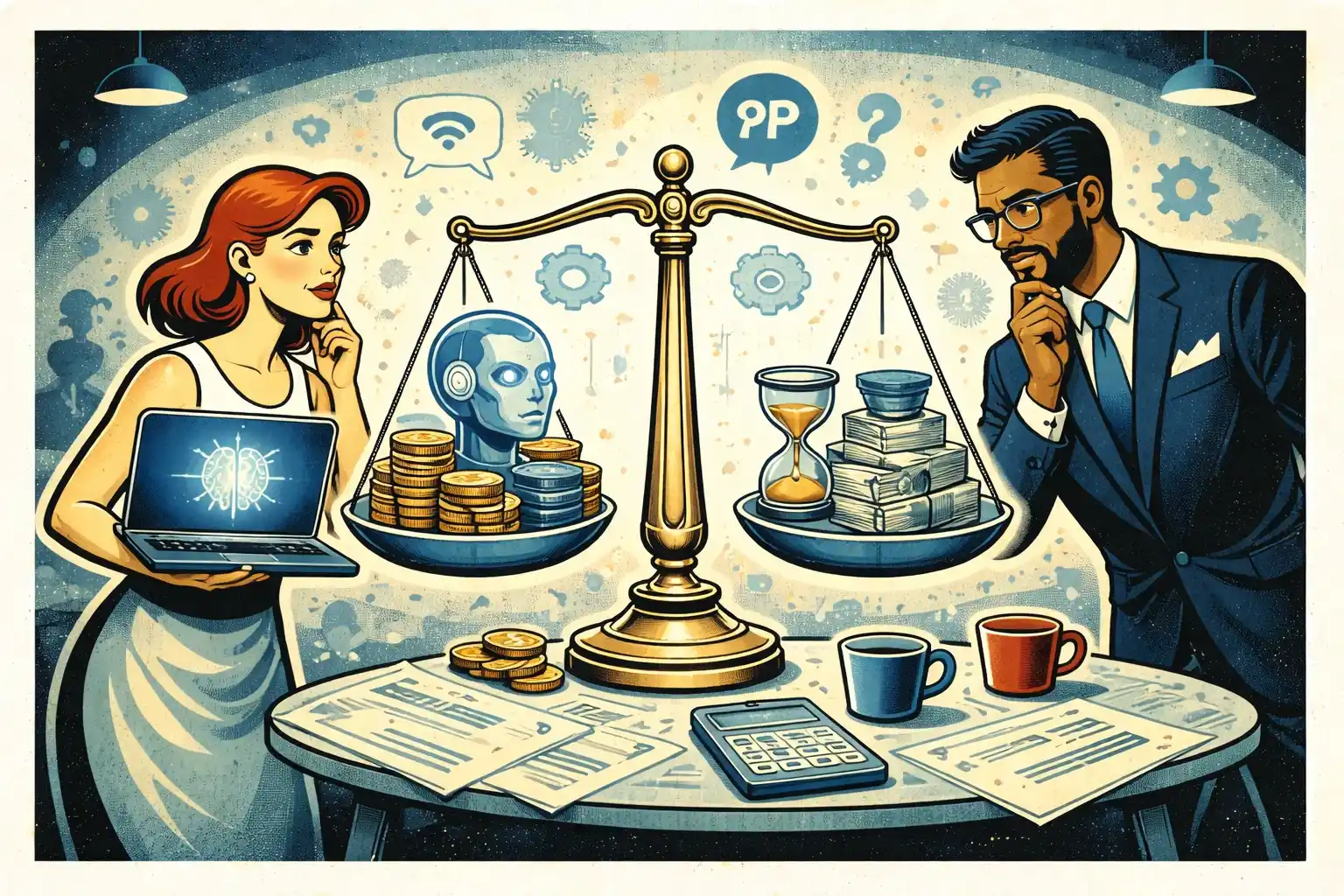
In 2026, the “agency vs in-house” decision is less about ideology and more about risk. The wrong setup can burn months, inflate scope, and stall learning. This article helps non-technical founders pick the right build model for their stage: when an agency wins, when in-house actually makes sense, and when a hybrid approach is the safest. You’ll get a clear decision framework, the hidden costs most budgets miss, and practical questions to ask before you commit.
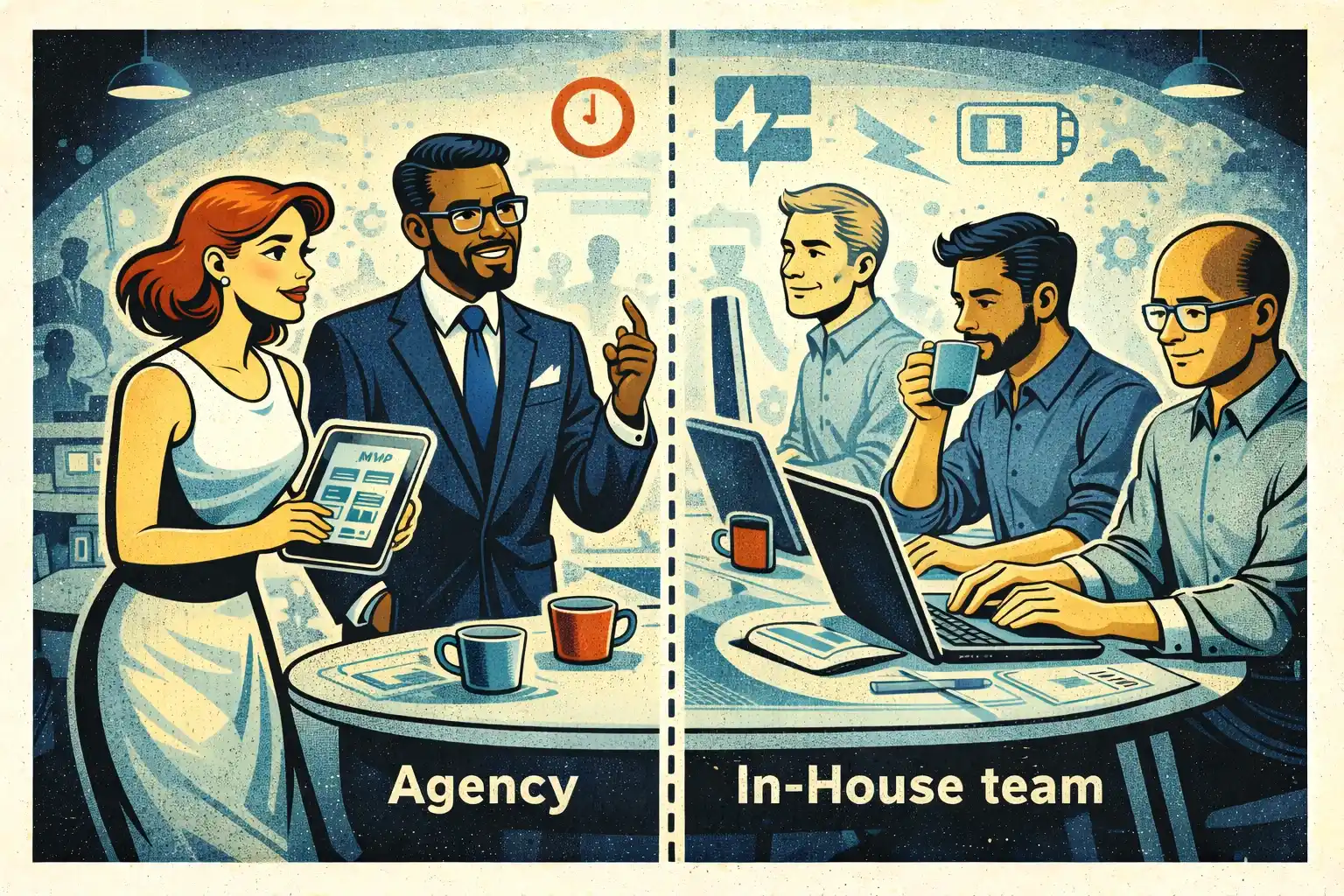
TL;DR: If you need speed, clarity, and a first live version fast, an agency or small studio usually wins in 2026.If you need long-term product ownership and you can keep a team busy for 12+ months, in-house can pay off—but only after scope is stable.
Why this choice got harder in 2026
A few years ago, the narrative was simple: “In-house is best, agencies are risky.” In 2026, it’s more nuanced.
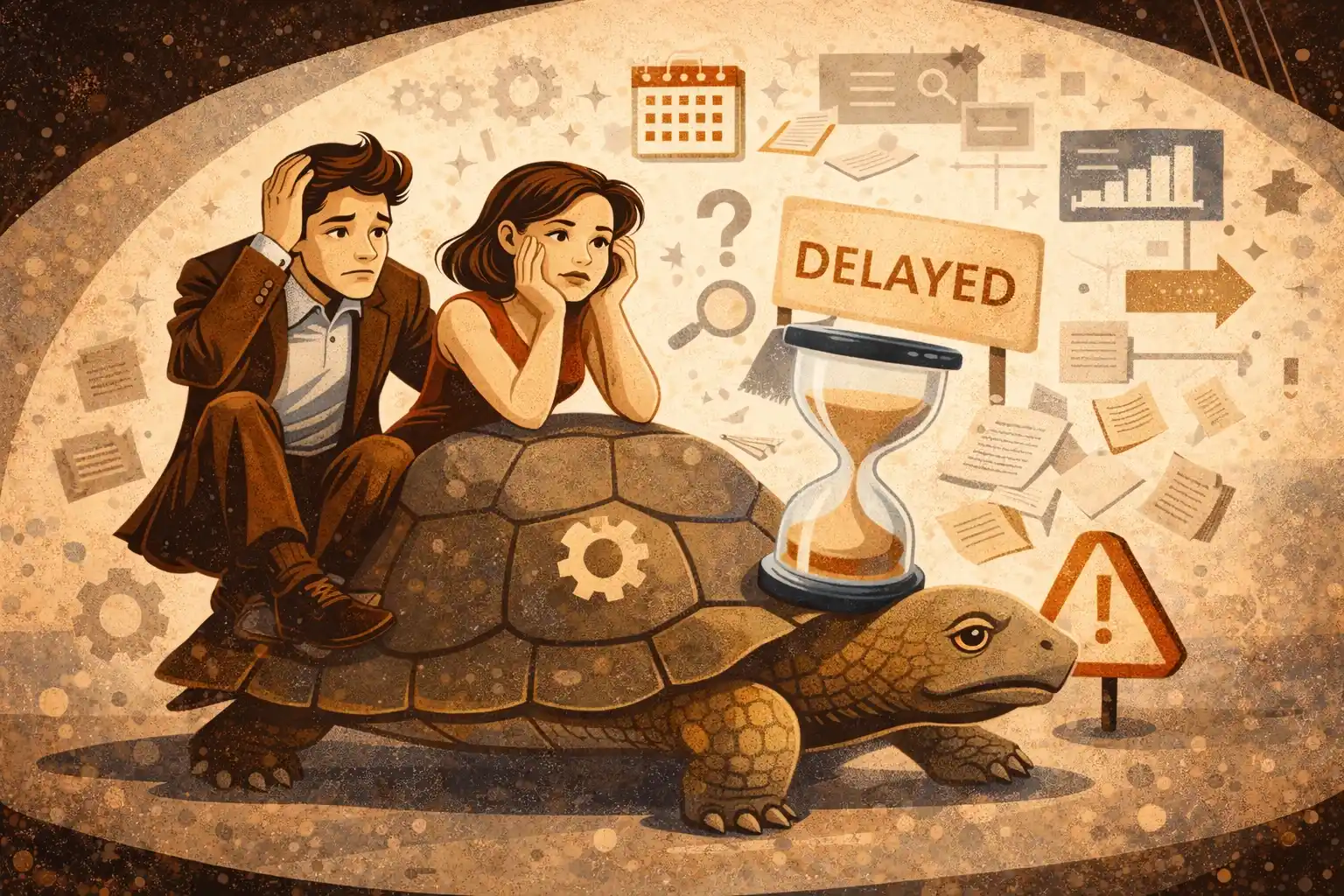
Most early-stage startups don’t fail because they chose the wrong “type of team.” They fail because they chose a team model that didn’t match their stage. The result is predictable:
- You hire too early, before the product is clear.
- You outsource too late, after the scope exploded.
- You build for months without learning from real users.
If you’ve ever seen a project drown in endless feature requests, you already understand the real problem: ownership and focus.
What “agency” and “in-house” really mean (in founder terms)
Founders often compare the wrong things.
An “agency” can mean anything from a big dev shop with account managers to a small, founder-led studio that ships MVPs end-to-end. Those are not the same.
An “in-house team” can mean a single senior engineer, or a full product pod (PM, designer, engineers, QA). Those are also not the same.
So instead of labels, compare what you actually need:
- Who owns scope decisions?
- Who owns speed-to-learning?
- Who owns quality and stability?
- Who owns delivery predictability?
A good starting point for this broader comparison is Startup App Development Company vs Freelancers vs In-House Team.
When an agency is the smarter move
An agency (especially a small studio built for MVP delivery) tends to win when:
1) You need a first version fast
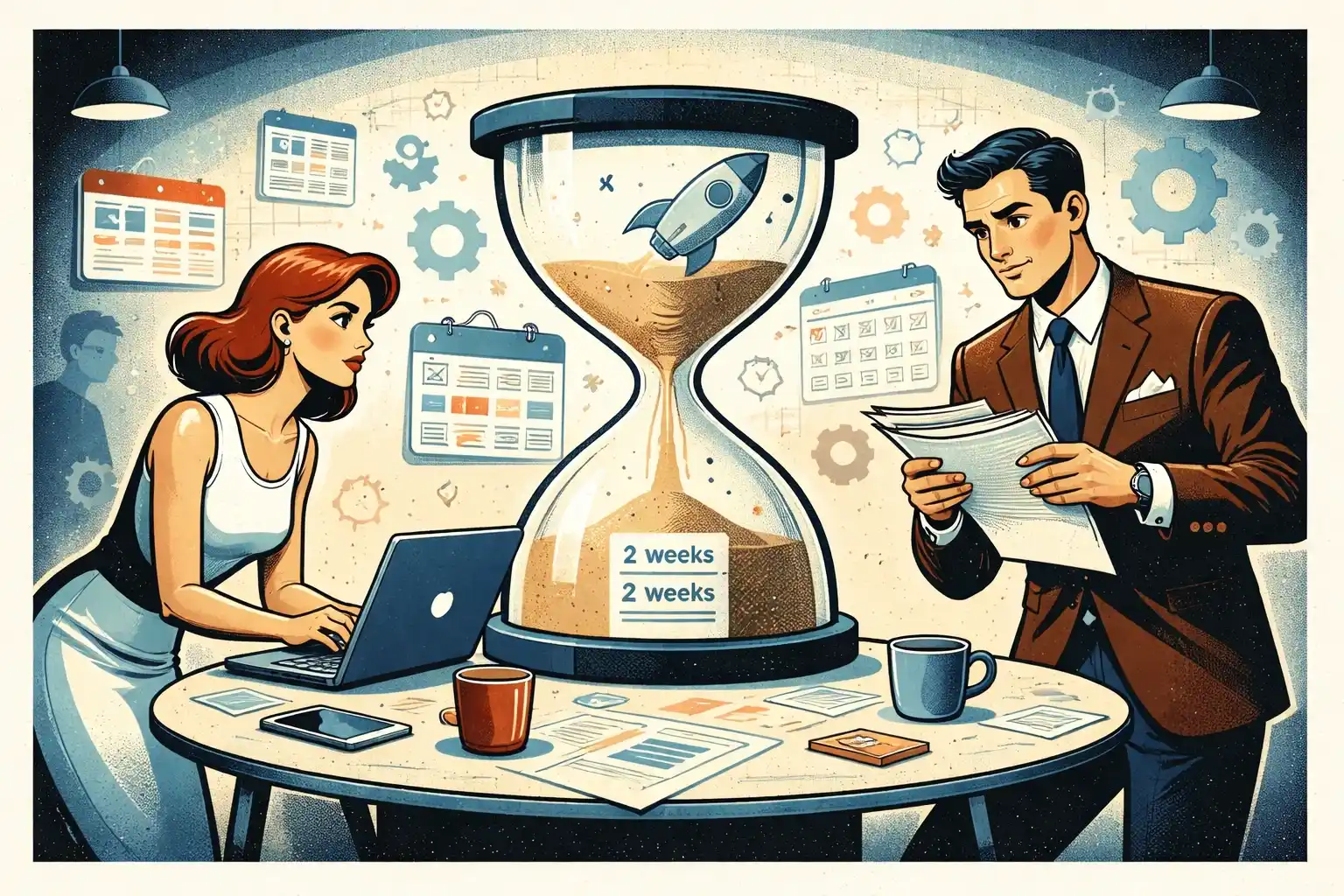
Early-stage is a race for clarity, not perfection. If your product is still changing weekly, you don’t want to spend months building internal process.
An agency is usually better at:
- turning a fuzzy idea into a shippable scope,
- designing the UX quickly,
- building a first version that can handle real users.
If you need to understand what a realistic “first version” includes, read MVP Development Services for Startups: What’s Actually Included.
2) You don’t have a product operator inside the company
Many founders assume developers will “figure out the product.” They won’t — and they shouldn’t.
If your team model doesn’t include product thinking, the scope becomes a graveyard of “nice-to-have” features.
3) Your budget is real, but your timeline is tighter
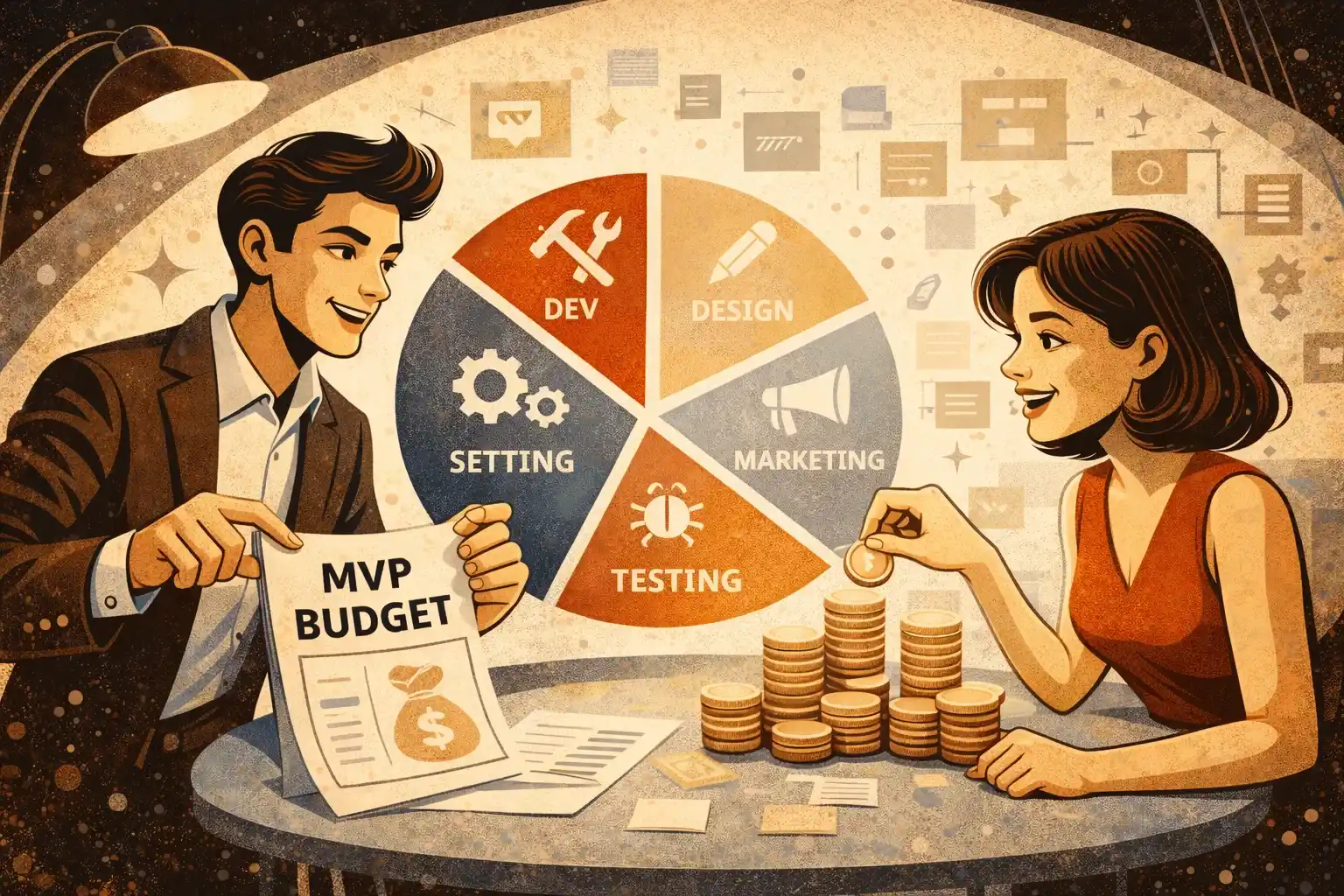
Agencies cost more per hour, but they often cost less per outcome — because you avoid long ramp-up and hiring mistakes.
A useful mindset shift: your biggest cost isn’t hourly rate. It’s months of runway.
When in-house makes sense (and when it’s a trap)
In-house is a great fit when you can answer “yes” to most of these:
1) Your scope is stable enough to keep people busy
If your roadmap changes daily, a brand-new in-house team will burn time debating architecture, tooling, and process.
But if you already have a working product and steady iteration needs, in-house becomes powerful.
2) You can hire at least one senior person who can lead
A junior-heavy in-house team without strong product leadership is the fastest way to slow down.
This is where many founders lose time: hiring looks cheaper than outsourcing, but the management and coordination cost becomes the real price.
A practical hiring angle is covered in How Non-Technical Founders Can Hire App Developers for a Startup.
3) You actually need long-term internal ownership
If your product has heavy domain complexity, security constraints, or continuous internal iteration (think: infrastructure, compliance, deep integrations), in-house can be the right long-term investment.
But doing in-house too early is a common pre-seed mistake.
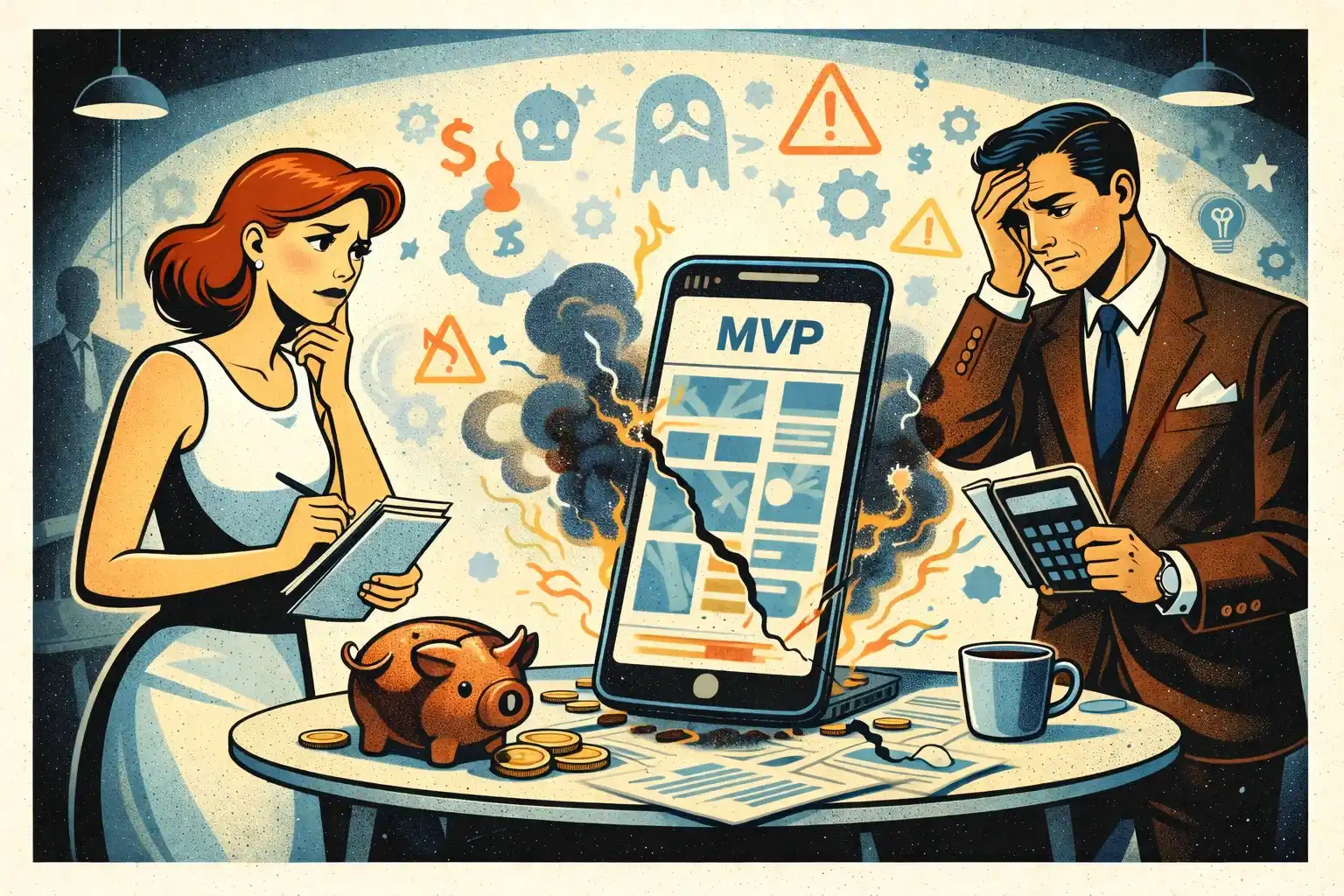
The hidden costs founders underestimate (on both sides)
This is where most “comparisons” go wrong.
Hidden costs with agencies
- unclear scope = endless change requests
- weak handoff = you get code but no ownership
- misaligned incentives = “deliver tasks” instead of “ship outcomes”
If you want to avoid the classic traps, read Outsource Development for Startups: Pros, Cons, and Red Flags.
Hidden costs with in-house
- hiring lead time (weeks to months)
- onboarding and process setup
- management load on the founder
- turnover risk (one key person leaving can freeze the roadmap)
A founder-safe rule: if you don’t have stable weekly product work for a team, you’ll pay for idle time—or you’ll push features just to justify payroll.
The safest model for most early-stage founders: hybrid
For many startups in 2026, the cleanest path looks like this:
- Use a small agency/studio to ship the MVP quickly.
- Launch, measure behavior, and fix the real problems.
- Move key parts in-house once the product and workflow stop changing every week.
This approach also helps you hire better. When you already have a working product, hiring becomes about improving something real — not building from guesswork.
If you want a clear view of that “from first version to traction” journey, read Full-Cycle MVP Development: From Discovery to First Paying Users.
A simple decision framework
If you’re deciding this month, ask yourself:
- Do I need speed-to-learning more than long-term ownership right now?
- Do I have clear scope and priorities—or do I need help shaping them?
- Can I manage a team weekly, or will it steal time from sales, users, and partnerships?
- What is more expensive for me: higher hourly rate, or a slower launch?
If your answers lean toward speed, clarity, and launch: start with an agency.If your answers lean toward stable iteration, deep ownership, and long-term capacity: build in-house.
Thinking about building a web or mobile app in 2026?
At Valtorian, we help founders design and launch modern web and mobile apps — with a focus on real user behavior, not endless “feature lists.”
Book a call with Diana
Let’s talk about your idea, scope, and fastest path to a usable MVP.
FAQ
Is in-house always cheaper than an agency?
Not usually in the first 6–12 months. Hiring time, onboarding, and management often make early in-house more expensive in practice.
What’s the biggest risk of choosing an agency?
Vague scope and unclear ownership. If you can’t describe the first version in plain language, you’ll pay for changes later.
What’s the biggest risk of going in-house too early?
Slow learning. You end up optimizing internal process while the market is still telling you what the product should be.
Can I start with one engineer instead of an agency?
Yes — if that engineer is senior, product-minded, and you can support them with design and QA. Otherwise, you’ll likely move slower than expected.
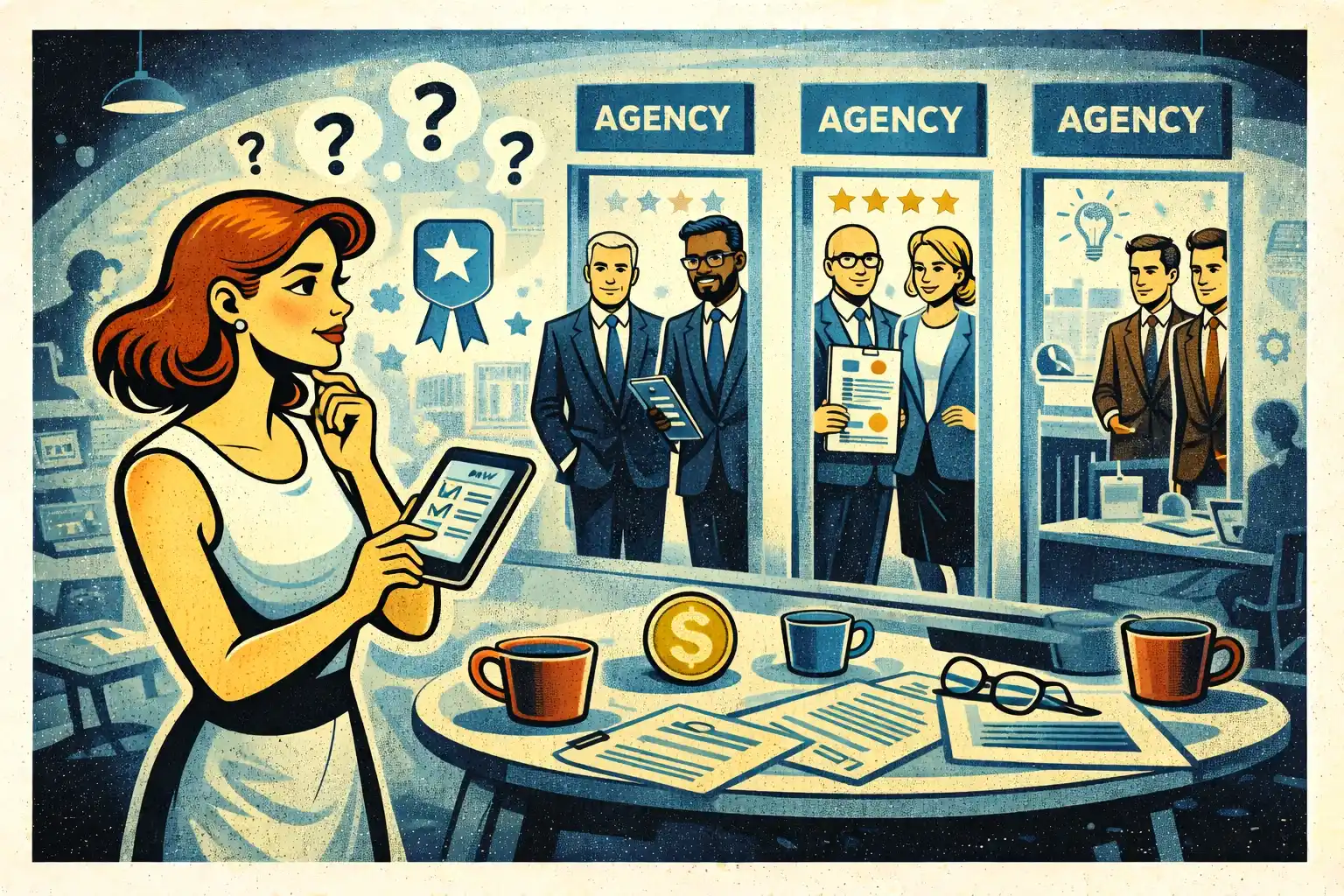
How do I compare agencies quickly without getting sold to?
Ask for a proposed MVP scope, a timeline that includes QA, and what they’ll measure in the first 30 days after launch.
When should I switch from agency to in-house?
When your product has real usage, repeatable workflows, and you can keep an internal team busy improving specific parts — not inventing the roadmap.












































.webp)




.webp)