.webp)
What Investors Expect From MVPs in 2026
In 2026, investors rarely fund “an MVP” just because it exists. They want evidence that your product solves a real problem, that users behave the way your pitch claims, and that your team can ship consistently without burning runway. This article breaks down what most early-stage investors expect to see in a first version: the signals, the metrics, the scope choices, and the story that connects them. If you’re a non-technical founder, you’ll also learn how to show progress without overbuilding.

TL;DR: In 2026, a good MVP is a proof machine: it shows demand, usage, and a repeatable ability to ship.Investors care less about feature count and more about clear scope, clean metrics, and traction signals that match your story.
The MVP story investors want to believe
When founders say “we’re building an MVP,” investors usually hear one question:
Can this team get to a real signal fast — without burning months on guesses?
In 2026, the bar is higher because it’s easier than ever to produce something that looks like a product. No-code, templates, and AI-assisted development can make a demo feel real. Investors know that. So they look for evidence, not polish.
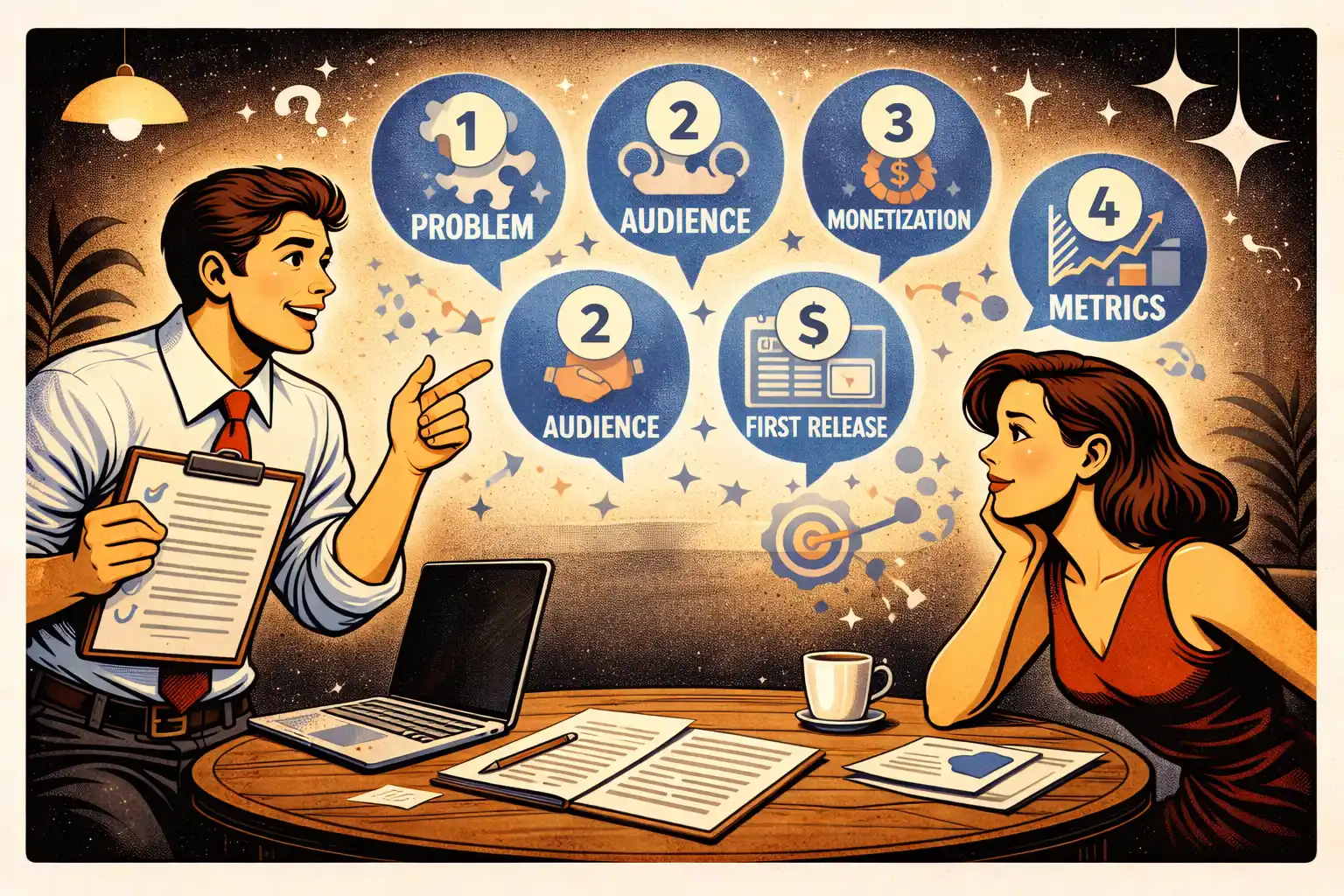
A strong MVP narrative is simple:
- A clear problem (not five problems).
- A narrow user and a narrow workflow.
- A product that makes that workflow meaningfully better.
- Early signals that the market is responding.
If your MVP can’t tell that story in plain language, your deck will have to work too hard.
1) Proof of demand (before proof of scale)
Early-stage investors don’t expect you to have scale. They expect you to have direction.
The first thing they pressure-test is: “Is this real — or is it founder excitement?”
In practice, this can look like:
- A waitlist that converts into actual usage (not just signups).
- Paid pilots or small paid commitments (even if revenue is tiny).
- A repeatable acquisition channel that produces qualified users.
- Strong qualitative evidence: specific pain, specific workflows, consistent patterns.
If you’re still validating, do not hide it. Show what you tested, what you learned, and what you changed.
If you need a practical validation approach, refer to Validate a Startup Idea Before Development: 5 Experiments That Work.
2) A scope that proves focus (and protects runway)
Investors don’t love huge roadmaps. Huge roadmaps usually mean:
- unclear product thinking,
- higher build risk,
- slower iteration,
- and messy teams.
A good MVP in 2026 is intentionally “small,” but not “thin.” It does one job well enough that users can complete a real outcome.
A simple investor-friendly scope test:
If you remove this feature, can a user still reach the main outcome?
- If yes - it’s probably not MVP.
- If no - it’s likely core.
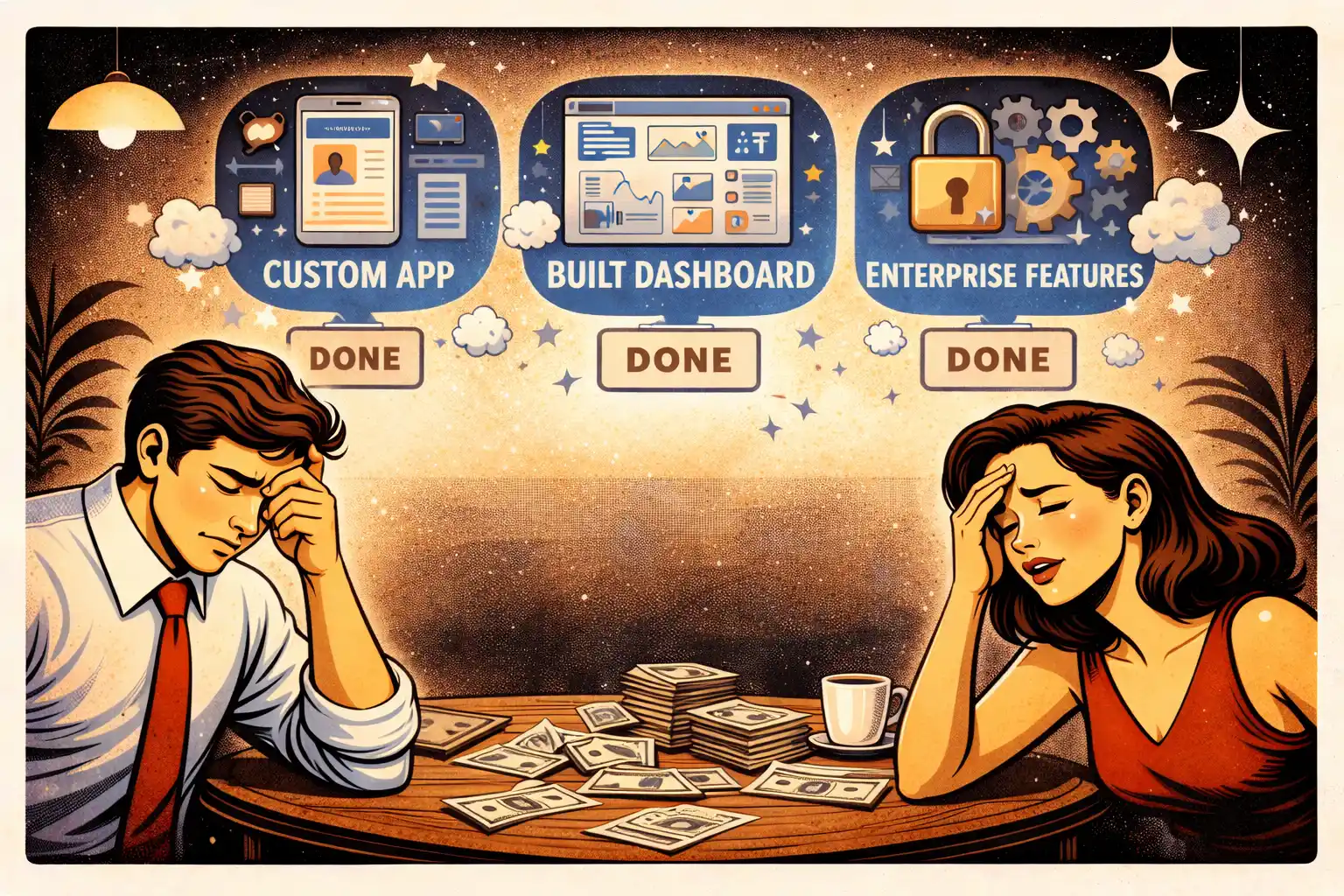
Most “bad MVPs” are actually a bundle of nice-to-haves that delay learning.
If you want a concrete mental model of what belongs in scope, see What a Good MVP Looks Like in 2026.
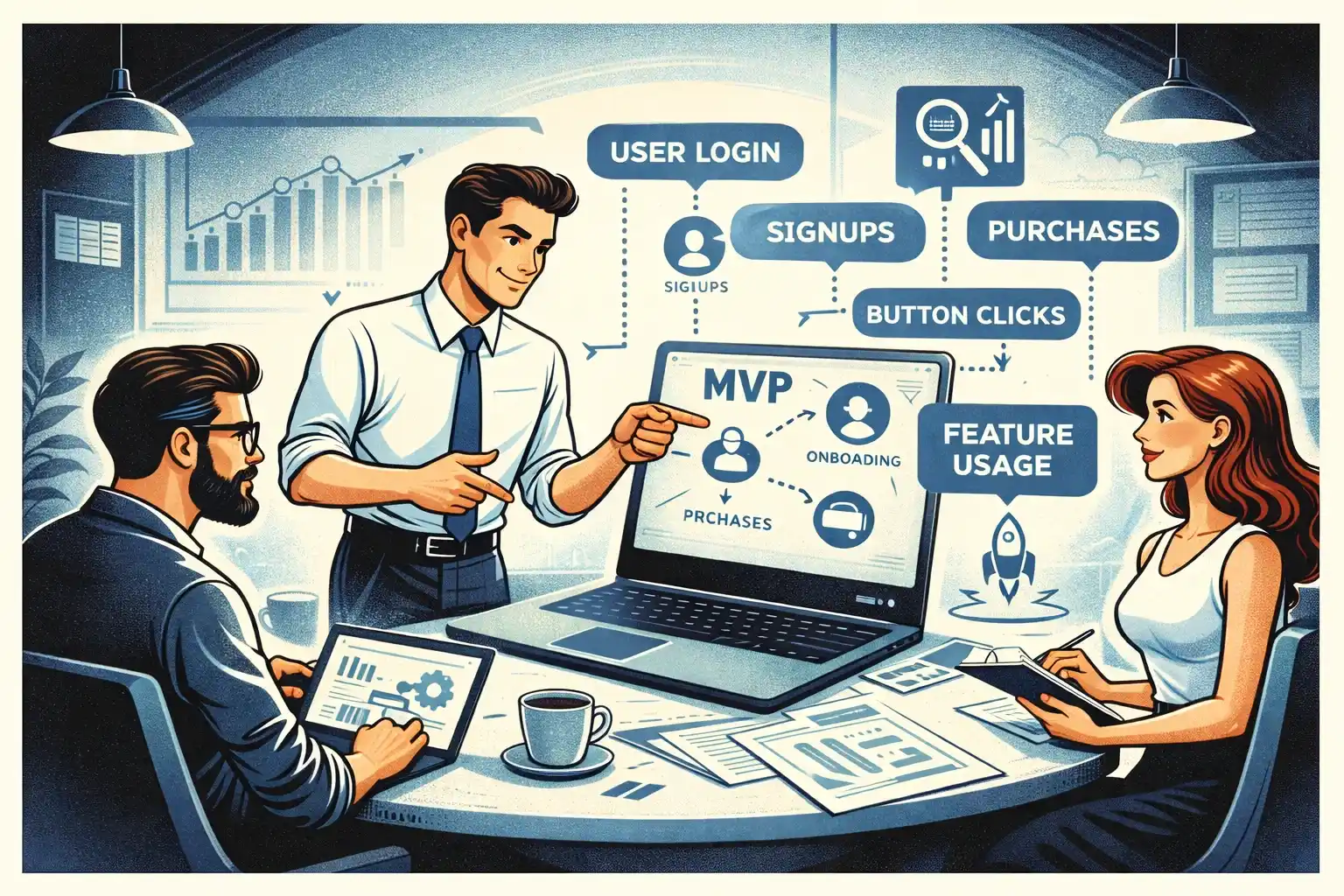
3) Metrics that match your claim (not a dashboard for show)
In 2026, investors expect you to instrument your product from day one. Not because you need “big data,” but because you need clarity.
The mistake is tracking everything. The better move is tracking a small set of signals that map to your pitch.
Examples:
- If you claim “we save time” → measure time-to-complete and repeat usage.
- If you claim “we reduce errors” → measure rework, cancellations, and support tickets.
- If you claim “we increase revenue” → measure conversion and retention cohorts.
What matters is that your metrics are:
- tied to a user outcome,
- understandable,
- and improving because you’re iterating.
If you want to align metrics with investor expectations, use Your First Product Metrics Dashboard: What Early-Stage Investors Want to See.
4) Shipping cadence: investors fund teams that move
In early-stage, investors often fund the team’s velocity as much as the idea.
What they look for:
- Can you ship weekly or bi-weekly improvements?
- Do you learn from releases?
- Do you fix what breaks fast?
- Do you keep scope stable enough to actually finish things?
This is one reason “full-cycle” teams win in 2026: design, development, and iteration live together. Less handoff means more shipping.
If your process is still fuzzy, review Full-Cycle MVP Development: From Discovery to First Paying Users.
5) A realistic plan for risk (not a promise)
Investors know your MVP has risk. They’re not allergic to risk — they’re allergic to unmanaged risk.
They want to see that you understand what can go wrong and how you’ll handle it:
- If adoption is slow → what will you test first?
- If retention is weak → what’s your hypothesis?
- If pricing doesn’t work → what’s your next step?
- If the product needs AI → what are the guardrails?
Founders who speak in “we’ll just” language (“we’ll just go viral,” “we’ll just add AI,” “we’ll just hire”) usually raise fewer rounds.
6) Evidence you can build without becoming dependent
In 2026, investors are cautious about “one-person tech miracles” and also cautious about “outsourced black boxes.” They want confidence that:
- you own the product decisions,
- you understand what’s being built,
- and you can continue shipping after the first release.
For non-technical founders, this is where the right partner or team structure matters.
If you’re choosing a team, and you want to avoid common traps, read Outsource Development for Startups: Pros, Cons, and Red Flags.
What investors don’t really care about (as much as founders think)
A few things founders often over-invest in early:
- Perfect animations and pixel-level polish.
- Complex role systems “for later.”
- Scalability architecture for users you don’t have.
- A long backlog that proves you can imagine features.
Investors care about credible progress. That’s usually:
- a working core workflow,
- users completing it,
- measurable behavior,
- and a team that can iterate.
Thinking about raising funding or pitching your MVP in 2026?
At Valtorian, we help founders design and launch modern web and mobile apps — with a focus on real user behavior, clear metrics, and fast iteration.
Book a call with Diana
Let’s talk about your idea, scope, and the fastest path to an investor-ready MVP.
FAQ
What traction do investors expect from an MVP in 2026?
It depends on your market, but they usually want at least one strong signal: repeat usage, paid pilots, or clear activation/retention trends.
Should I launch before I talk to investors?
Often yes. Even a small live product with real usage makes your pitch more believable than a polished prototype.
What MVP metrics matter most early on?
Activation, retention, and one core value metric tied to your promise (time saved, completion rate, conversion, etc.).
Can a non-technical founder raise without a tech co-founder?
Yes, if you show strong product leadership, clarity on scope, and a credible ability to ship and iterate consistently.
How do I avoid overbuilding before fundraising?
Define one user, one workflow, and one outcome — then ship the smallest version that proves that outcome.
Do investors expect AI in the MVP in 2026?
Only if it clearly improves the user workflow. “AI because it’s 2026” usually adds risk without improving traction.









































.webp)




.webp)