.webp)
MVP Development Costs in 2026
MVP pricing in 2026 is confusing because the same “app idea” can cost wildly different amounts depending on scope, risk, and speed. This article explains what actually drives MVP costs, the hidden budget line items founders miss, and a simple way to build a realistic range before you talk to developers. You’ll also learn how to keep scope tight, reduce uncertainty early, and plan for the first post-launch iteration cycle without surprises.

TL;DR: In 2026, MVP cost is mostly a function of scope clarity, uncertainty, and how fast you want to ship.The best way to control budget is to define one measurable user outcome, build the smallest useful workflow, and fund post-launch iteration as part of the MVP plan.
Why MVP budgeting feels harder in 2026
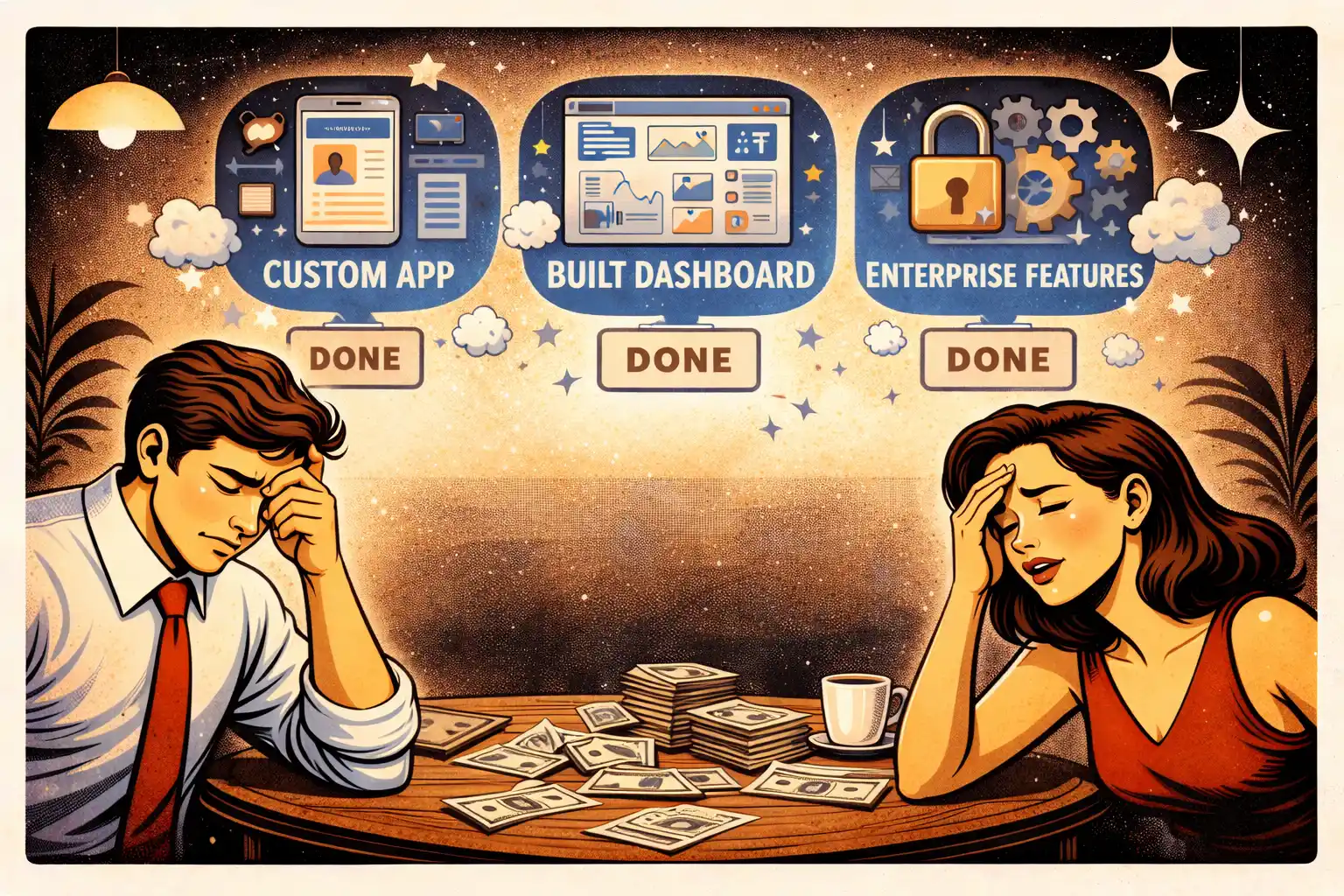
Founders rarely struggle because they can’t “afford development.” They struggle because the budget is based on a story, not a plan.
In 2026, teams ship faster with better tools, but expectations also rose. Users expect clean UX, stable releases, and basic analytics from day one. And if you’re adding AI, you’re not just adding a feature — you’re adding uncertainty.
So the real budgeting question is not “How much does an MVP cost?” It’s: “What’s the smallest version that can produce a real signal from real users?”
If you want a deeper lens on what goes into the “first version” versus what can wait, start with What a Good MVP Looks Like in 2026.
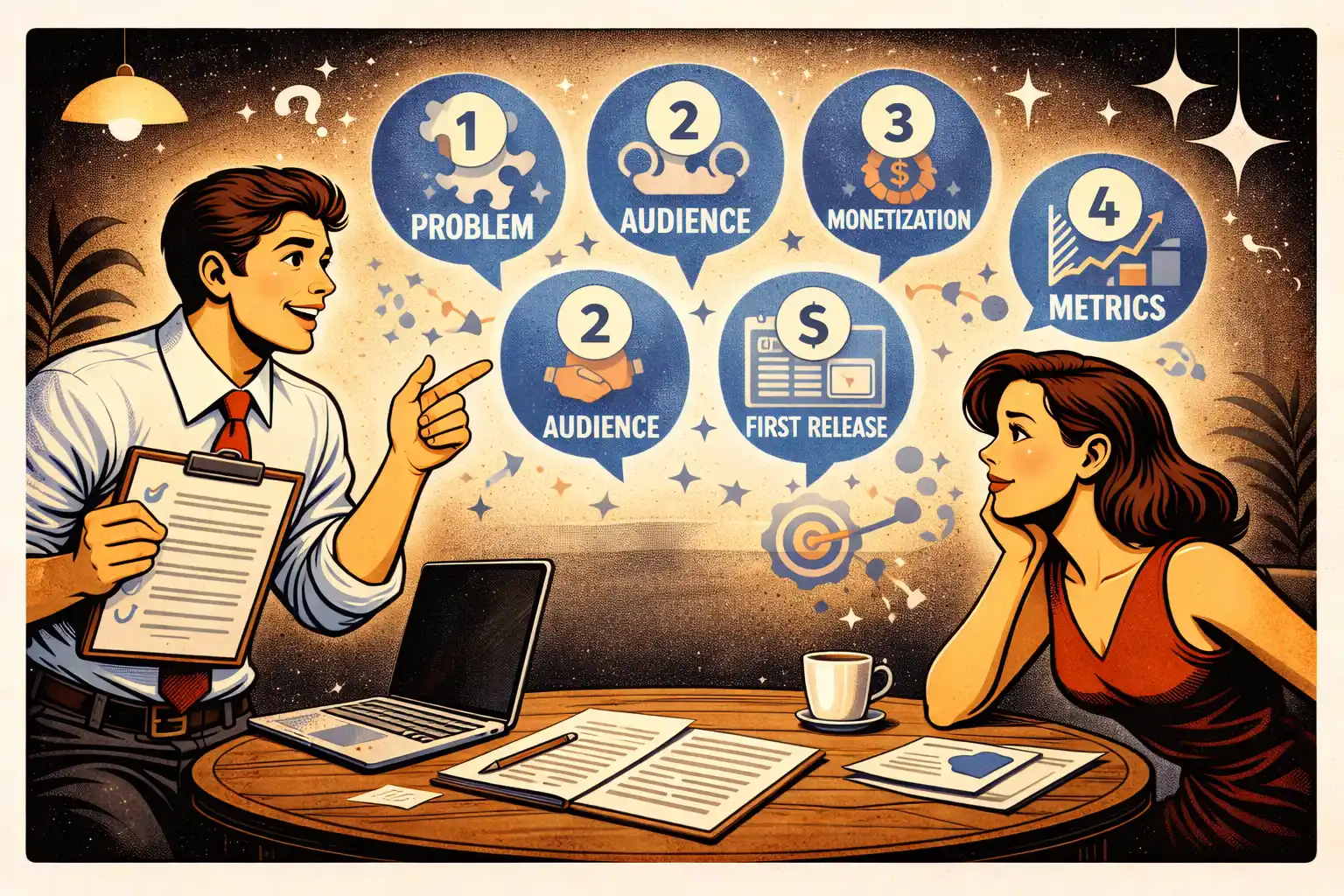
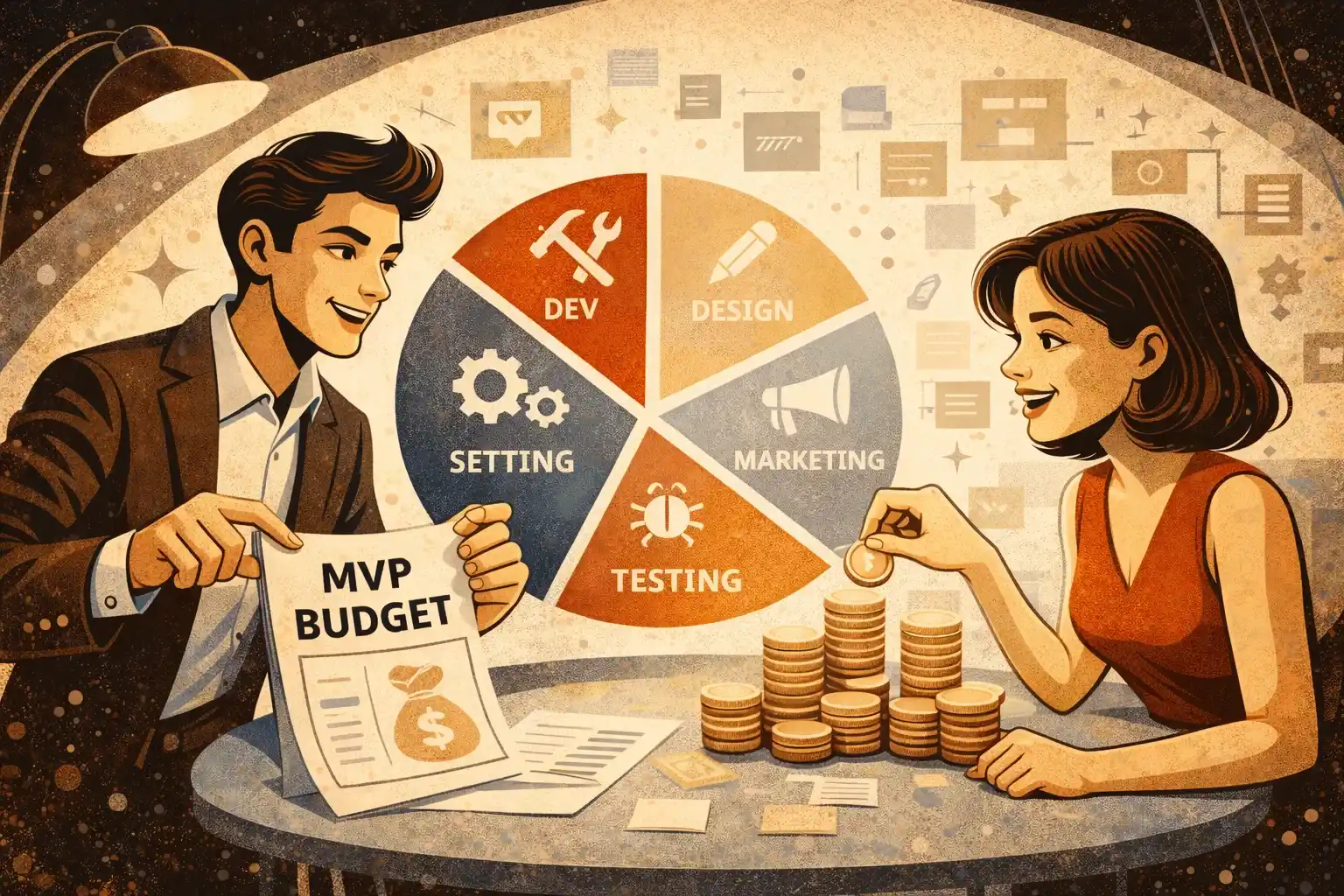
The 4 buckets that make up almost every MVP cost
Most MVP budgets are a mix of these same buckets. If one is missing from the estimate, the project usually becomes unpredictable.
1) Product scope and UX
This is where you translate an idea into a buildable workflow: screens, user roles, edge cases, and the few decisions that matter.
Skipping this phase doesn’t save money — it moves the cost into rework.
2) Engineering and integrations
This is the actual build: frontend, backend, database, and any third-party services (payments, maps, email, AI, etc.). Integrations are often what makes a “simple” MVP expensive.
3) QA, release, and stability work
Even early-stage users expect a product that doesn’t break every day. This includes testing, bug fixing, store submissions (if mobile), and basic performance checks.
4) Launch support and iteration
The first version is not the finish line. You’ll need time for fixes, small UX changes, and the first set of learnings once users behave differently than your assumptions.
If you’re trying to map this into a more detailed breakdown, see MVP Development Cost Breakdown for Early-Stage Startups.
A founder-friendly way to estimate MVP cost (without guessing)
You don’t need a perfect spec to budget. You need a tight definition of “done.”
Here’s a simple method that works even for non-technical founders.
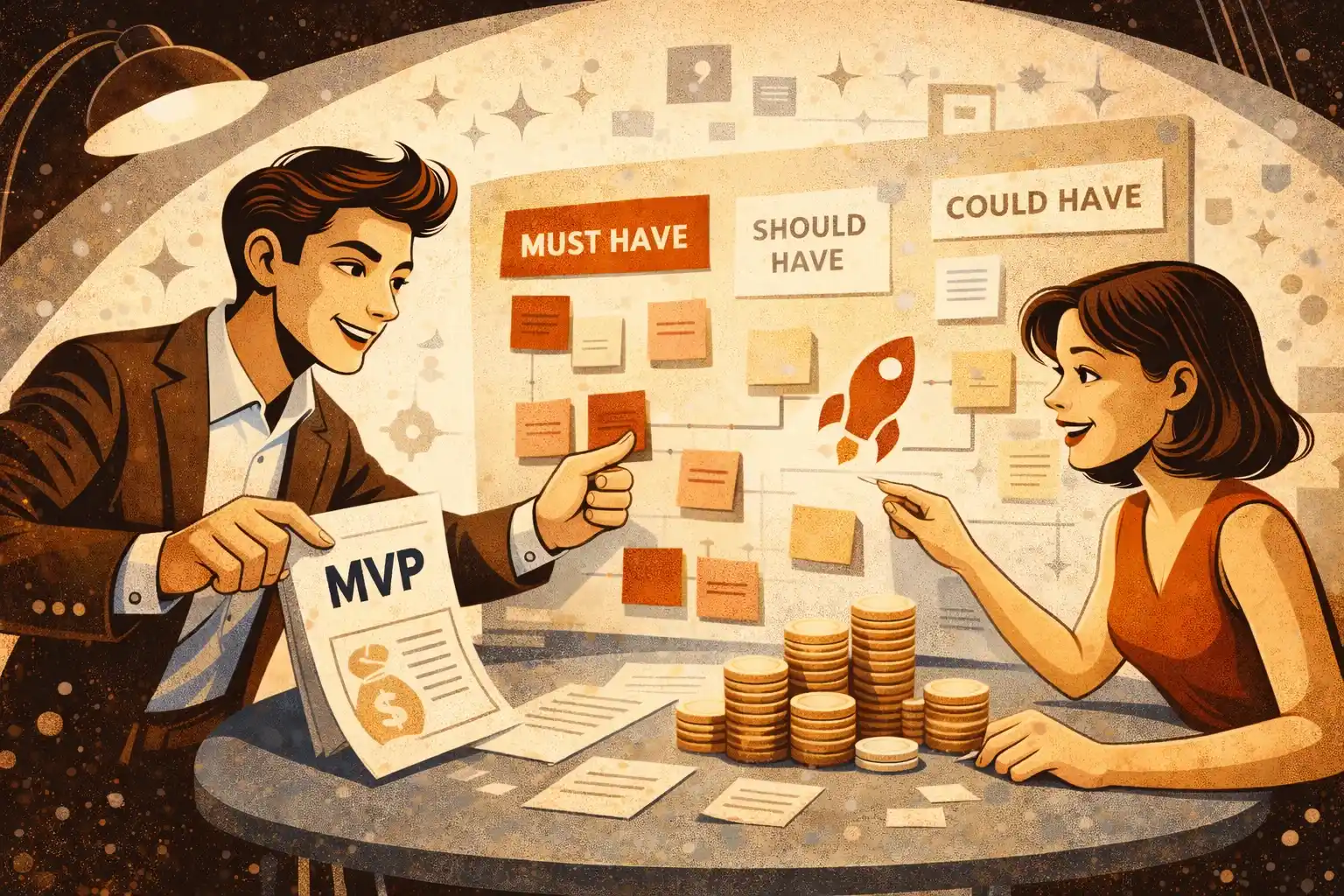
Step 1: Define one primary user outcome
Not “build a marketplace.” Not “build an AI app.” One outcome.
Examples:
- “A user completes a booking and pays.”
- “A user gets a personalized plan and saves it.”
- “A team member submits a request and an admin approves it.”
Step 2: Write the smallest complete workflow
List the minimum steps from first open to completed outcome. Include what happens when things go wrong (invalid data, payment fails, AI output is unusable, user forgets password).
If you’re unsure what to include in a first release, Choosing an MVP Development Company as a Non-Technical Founder will help you pressure-test scope without getting buried in technical detail.
Step 3: Decide what “simple” means for v1
This is where costs change fast. “Simple” can mean:
- One platform instead of two (web first, or mobile first).
- One onboarding path, not three.
- One payment plan, not a full billing matrix.
- One admin flow that’s manual, not fully automated.
If you’re choosing between web, mobile, and SaaS-first, App Development Cost for Startups: Web vs Mobile vs SaaS is the cleanest way to think about the trade-offs.
Step 4: Budget as a range, not a single number
A single number assumes perfect clarity and zero surprises. That’s not how startups work.
A better approach is:
- A “base” budget for the smallest useful version.
- A “buffer” for unknowns and iteration.
- A “post-launch” slice for the first 2–4 weeks of fixes and improvements.
The 3 levers that control MVP cost
When founders get very different quotes, it’s usually because one of these levers is different.
Scope
Scope is not the number of features. It’s the complexity of the workflow.
Two apps with “the same features” can have different scope if one has more roles, more edge cases, or more integrations.
Uncertainty
If the workflow is unclear, the cost goes up.
AI increases uncertainty if you don’t define boundaries:
- What inputs are allowed?
- What’s the fallback when output is wrong?
- What’s acceptable quality for v1?
If you’re building with AI involved, AI Product Mistakes Startups Make in 2026 is a fast way to avoid expensive detours.
Speed
Speed isn’t just “work faster.” It often means adding capacity or cutting scope.
If you push for a short timeline with a wide scope, you pay for context switching, rushed QA, and overtime — and it still tends to slip.
Where founders accidentally overspend
These are the patterns that blow budgets without feeling like “big scope.”
- Building for two platforms before your workflow is proven.
- Adding a complex admin panel instead of a minimal internal dashboard.
- Designing every edge case before you have user behavior data.
- Over-investing in AI quality in v1 instead of building the guardrails and measurement.
- Chasing “perfect architecture” too early.
If you’re trying to keep spend realistic without going “cheap and risky,” Affordable MVP Development for Startups on a Realistic Budget is the most practical framing.
What to plan for after launch (and why it matters for cost)
A lot of founders treat launch as the end of the MVP budget. But the first real learning happens after release.
Plan for:
- Bug fixes from real devices and real user flows.
- Small UX adjustments once you see drop-offs.
- Basic analytics review and next-step decisions.
- One or two iteration cycles, not a full roadmap.
This is also where teams either build momentum or stall. If you need a clear approach to shipping quickly without chaos, How to Launch an App in Weeks: Fast MVP and First Version Launch Framework fits well with this cost planning mindset.
Thinking about building a startup MVP in 2026?
At Valtorian, we help founders design and launch modern web and mobile apps — with a focus on real user behavior, not vague scopes and surprise invoices.
Book a call with Diana
Let’s talk about your idea, scope, and fastest path to a usable MVP.
FAQ
Why do MVP quotes vary so much for the “same” idea?
Because the real cost driver isn’t the idea — it’s workflow complexity, number of roles, integrations, and how clear the scope is.
Should I ask for a fixed price or time-and-materials?
If your scope is tight and validated, fixed-price can work. If the product is still changing weekly, time-and-materials with clear weekly deliverables is often safer.
What’s the fastest way to lower MVP cost without ruining the product?
Cut platforms and edge cases first, not the core workflow. Ship one complete, measurable path that produces a real user signal.
Do I need an admin panel in the MVP?
Usually not. Many MVPs can start with a minimal internal dashboard or even manual operations, then automate once the workflow is proven.
How much budget should I keep for post-launch iteration?
Enough to handle fixes and one meaningful iteration cycle based on real user behavior. If you don’t fund this, the MVP often becomes a “v1 that never improves.”
Does adding AI always increase MVP cost?
Not always, but it increases uncertainty. If AI is involved, you need clear boundaries, fallbacks, and measurement — otherwise you end up paying for rework.


















































.webp)




.webp)