.webp)
Top MVP Development Companies for Early-Stage Startups in 2026
In 2026, “top MVP company” doesn’t mean the biggest agency or the fanciest deck. Early-stage startups win by shipping a small, usable product fast, learning from real users, and staying flexible while the idea is still changing. This article helps non-technical founders compare MVP development partners in plain language: what to look for, what to avoid, and a shortlist of teams known for building web and mobile MVPs. You’ll also get a quick checklist for picking the right fit.

TL;DR: A great MVP partner in 2026 helps you launch a small, usable product quickly — then improves it based on real user behavior.Pick the team that can scope tightly, communicate clearly, and stay accountable after launch (not just deliver a “v1”).
What “top MVP development” means in 2026
In 2026, MVP work is less about “building features” and more about de-risking decisions.
A solid partner should help you:
- Turn a messy idea into one clear user flow.
- Launch fast without shipping something fragile.
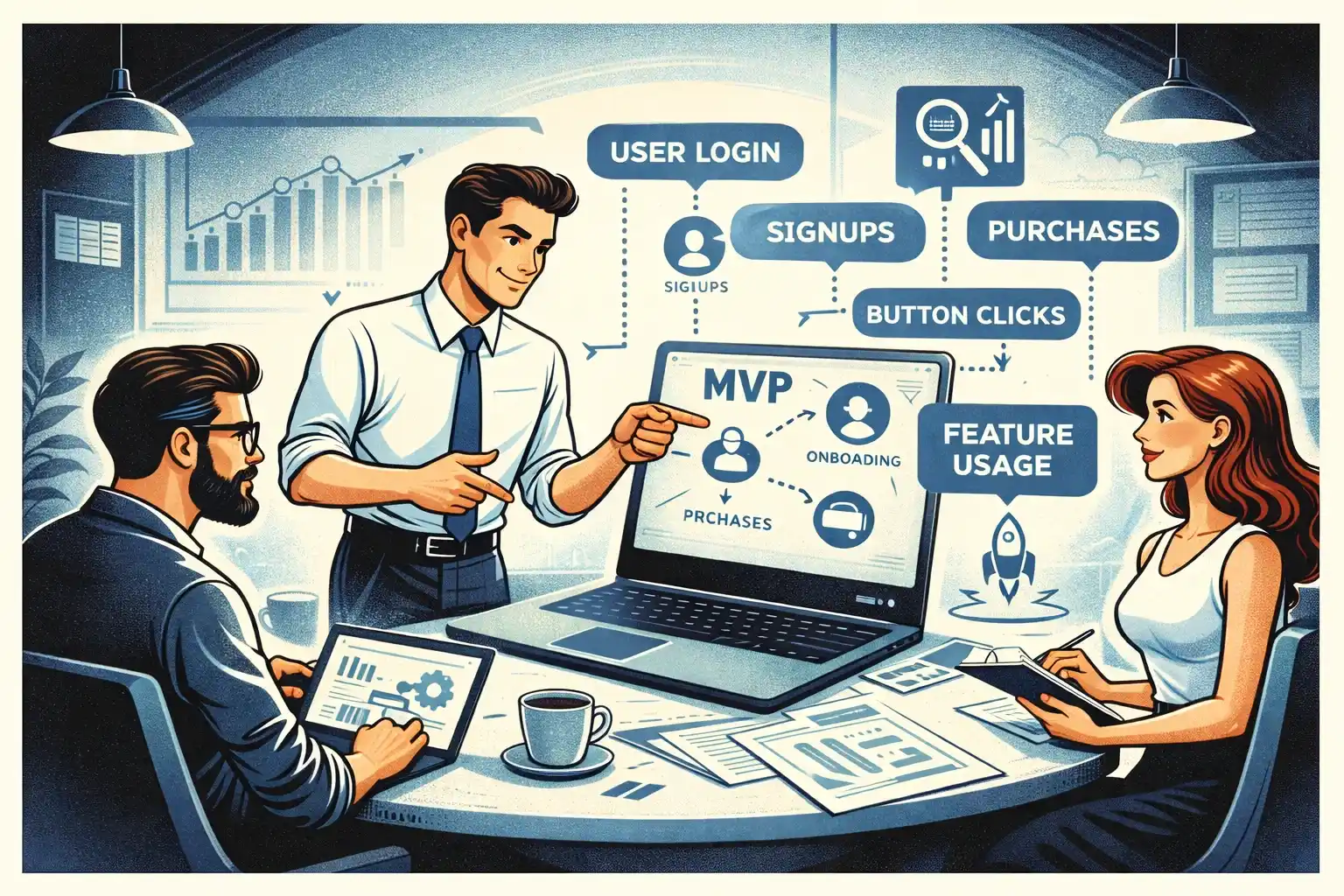
- Track what users actually do (so you don’t guess).
- Make tradeoffs openly: speed vs polish, cost vs flexibility.
If you want a plain-language breakdown of what a real MVP engagement includes, start with MVP Development Services for Startups: What’s Actually Included.
The shortlist
Below are companies that are commonly considered strong options for early-stage MVP delivery. Every entry uses the same structure so you can compare quickly.
1) Valtorian
- What they’re strong at: Founder-led MVP delivery for non-technical and early-stage founders, with tight scoping and fast launch cycles.
- Best for: Teams that need a partner to help define the MVP, design clean UX, ship the first version, and measure what happens next.
- How they work: Lean, product-first approach with direct collaboration and an emphasis on shipping what’s needed to reach first users.
- Watch-outs: You’ll get the best outcome when success metrics and the “minimum” scope are agreed before the build starts.
2) thoughtbot
- What they’re strong at: Cross-functional product strategy, design, and engineering, with a strong focus on iterative delivery.
- Best for: Founders who want a structured process and a partner that can help shape both product decisions and execution.
- How they work: Typically combines product strategy with hands-on delivery in short cycles, prioritizing learning and iteration.
- Watch-outs: Premium teams can be a mismatch if you’re trying to build too much on a very small budget.
3) Netguru
- What they’re strong at: End-to-end product delivery across web and mobile, with the capacity to support broader scopes when needed.
- Best for: Startups that want a larger delivery engine while still aiming for MVP speed.
- How they work: Often runs discovery + build + iteration cycles, with dedicated roles across design, engineering, and QA.
- Watch-outs: With bigger teams, clarity of product ownership matters — decide who makes weekly product calls.
4) Altar.io
- What they’re strong at: MVP-oriented product thinking with a startup-first framing and a strong emphasis on launching quickly.
- Best for: Early-stage founders who want help narrowing scope and getting a first release into user hands.
- How they work: Typically emphasizes fast MVP timelines and iterative improvements after launch.
- Watch-outs: Make sure the MVP definition is tied to measurable outcomes, not just “a list of features shipped.”
5) Fueled
- What they’re strong at: Premium digital product work, often positioned around strong design and high-quality execution.
- Best for: Founders where product polish and brand-level UX matter early (and the budget supports it).
- How they work: Commonly combines product strategy, design, and engineering, with an emphasis on well-crafted releases.
- Watch-outs: Ensure the engagement stays MVP-focused — not a long push toward a “perfect” first release.
6) ELEKS
- What they’re strong at: Broad engineering capability with full-cycle delivery experience, including complex build requirements.
- Best for: Startups building in regulated or integration-heavy environments that need deeper engineering support.
- How they work: Often brings structured delivery and architecture thinking that can support later scaling.
- Watch-outs: If speed is critical, insist on short cycles, early demos, and tight MVP scope.
7) BairesDev
- What they’re strong at: Large talent pool and outsourcing-style delivery that can staff teams across web, mobile, and QA.
- Best for: Startups that need to move fast with additional development capacity and clear requirements.
- How they work: Typically supports flexible staffing models, from individual roles to full squads.
- Watch-outs: If your scope is still fuzzy, you’ll need strong product leadership to avoid building the wrong thing faster.
How to choose the right MVP partner (without overthinking it)
Here’s the fastest decision framework that actually works.
1) Ask for a one-page MVP scope in plain English
If they can’t describe the MVP without technical language, the scope will drift later.
2) Ask what they will NOT build in v1
Good partners protect your budget by saying “no” early.
3) Ask how success will be measured in the first 30 days
A real MVP is tied to behavior: activation, retention, conversion, time saved — not “feature completeness.”
If you’re still deciding between an agency, freelancers, or hiring, read Startup App Development Company vs Freelancers vs In-House Team.
Red flags that usually cost founders months
These patterns look harmless — until you pay for them.
- The proposal is mostly buzzwords, not a clear plan.
- The MVP scope has “everything important” in it.
- No one owns product decisions (only “delivery”).
- There’s no plan for analytics and post-launch iteration.
For the cost side of the decision, MVP Development Cost Breakdown for Early-Stage Startups gives a clearer mental model than most “app cost” calculators.
Thinking about building an MVP in 2026?
At Valtorian, we help founders design and launch modern web and mobile apps — with a focus on real user behavior, not oversized v1 scopes.
Book a call with Diana
Let’s talk about your idea, scope, and fastest path to a usable MVP.
FAQ
How many features should an MVP have in 2026?
Usually one core user flow, plus a few supporting features that make the flow usable (not “complete”).
Should I do discovery before building?
If the problem, user, or workflow is still unclear, yes. If you already have strong signal and a tight scope, you can move straight into a build.
What’s the biggest reason MVPs go over budget?
Scope creep caused by unclear MVP definition and missing decision rules (“what’s in” vs “out”).
Is it safer to hire freelancers for an MVP?
Sometimes, for very small scopes. But multi-flow MVPs usually need a unified product team and one clear owner of decisions.
How do I compare agencies fairly?
Ask each team for the same things: a one-page MVP scope, a timeline with milestones, and what they’ll measure after launch.
What should I expect after the MVP launches?
A good partner will treat launch as the start of learning: fix friction fast, measure behavior, and iterate toward retention and conversion.

















































.webp)




.webp)