.webp)
MVP Scope and Focus in 2026
In 2026, MVP scope fails less because founders “don’t know tech” and more because they scope the wrong outcome. Teams ship features, not a usable workflow — and then wonder why activation is low. This article shows how to define a focused MVP that’s small but real: one job-to-be-done, one primary user path, and a clear “done” definition. You’ll learn practical rules for cutting scope, handling edge cases, and keeping your first release launchable.

TL;DR: A great MVP scope in 2026 is a single, end-to-end workflow that a real user can complete — not a long list of features.If you can’t explain the MVP in one sentence, you’re probably building a “version 1.5” before you’ve earned version 1.
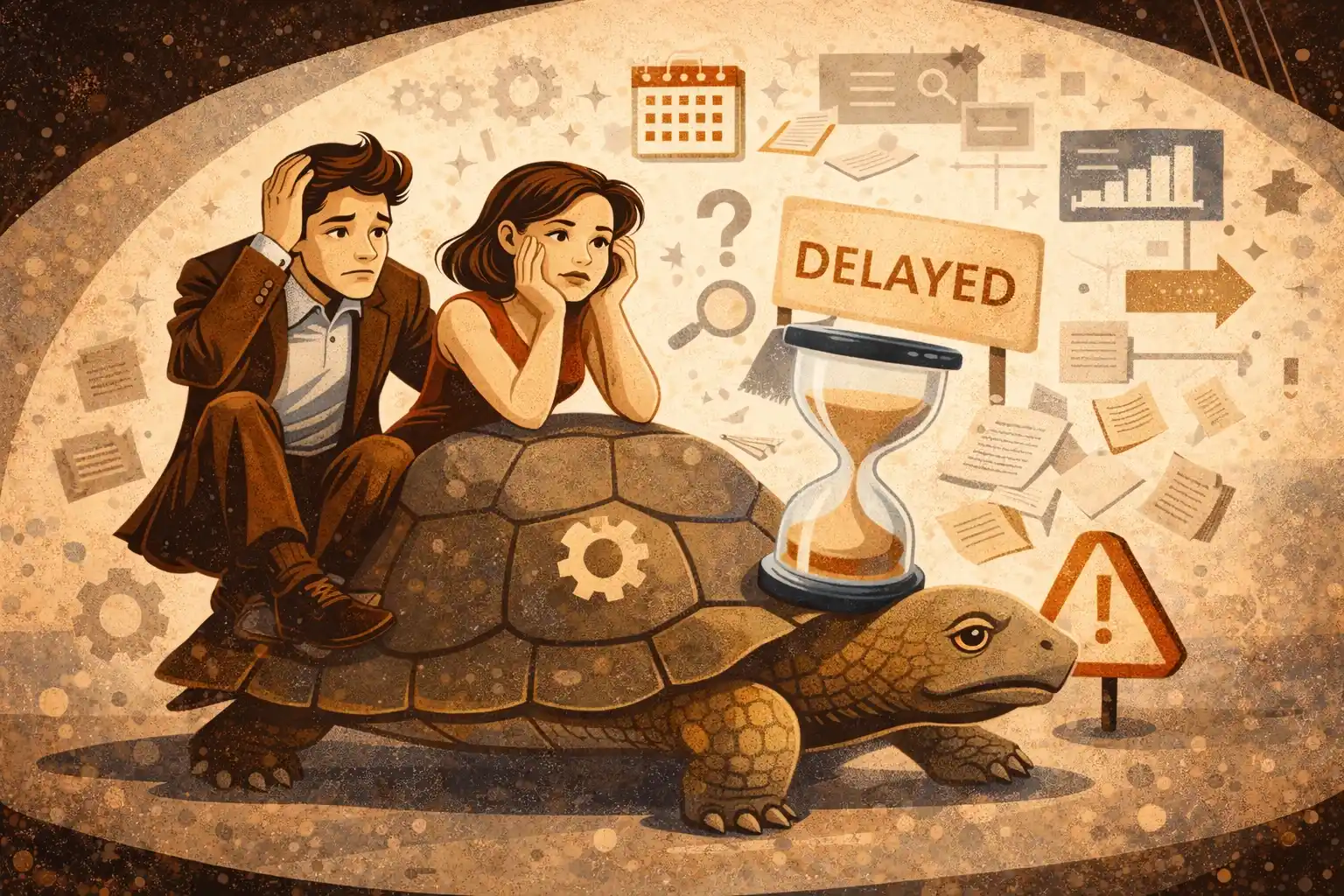
Why MVP scope breaks in 2026 (even for smart founders)
Most MVPs don’t fail because the idea is bad. They fail because the first version isn’t usable enough to create real behavior.
In 2026, scope drift usually comes from one of these patterns:
- You’re building “the full product” to feel safe.
- You’re trying to satisfy every future customer segment at once.
- You’re treating edge cases as must-haves instead of later problems.
- You don’t have a clear definition of success for the first 30 days.
If you want the broader context behind this, revisit Why MVPs Still Fail in 2026.
The 1-sentence MVP rule
Before you list features, force clarity:
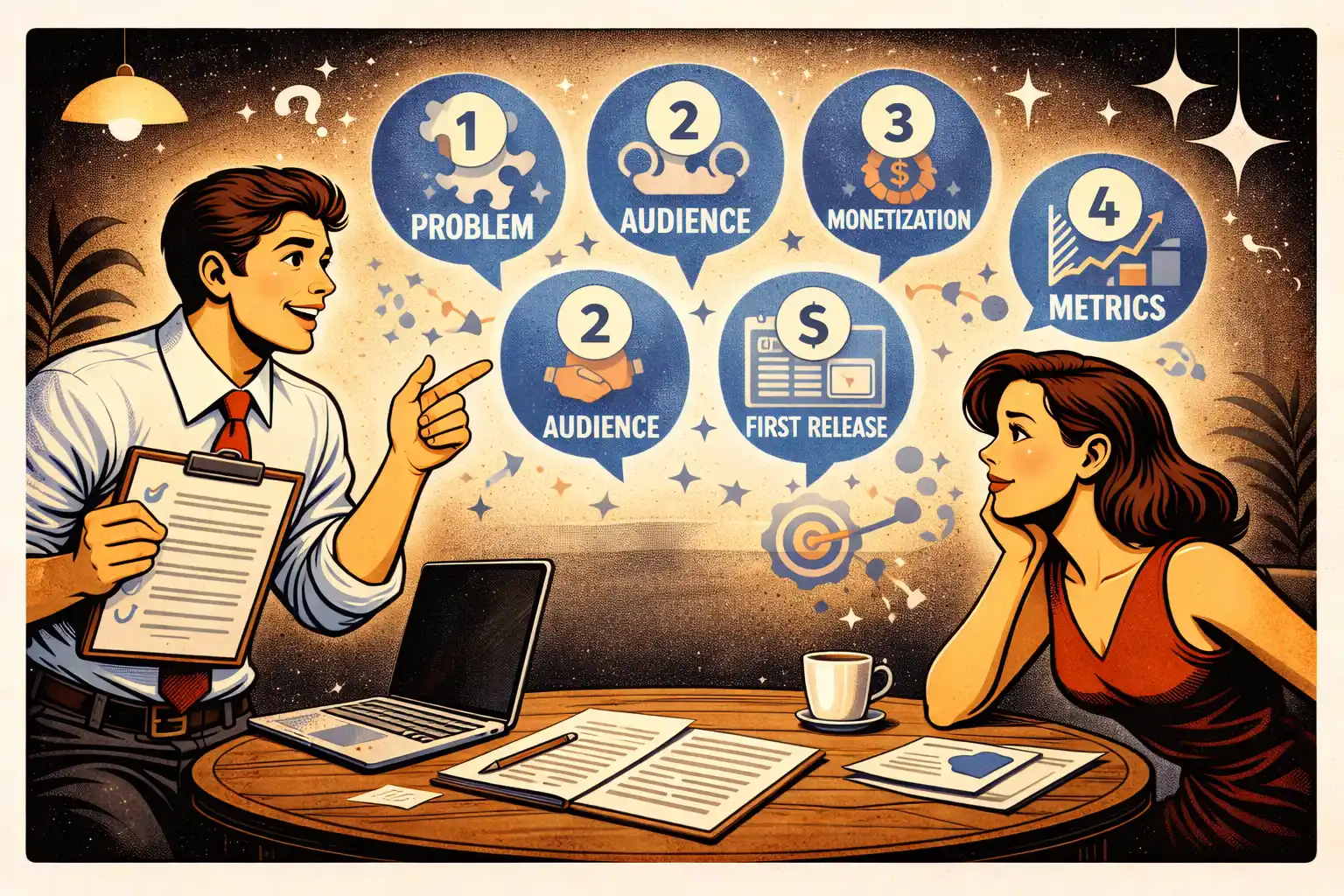
“The MVP helps [specific user] achieve [specific outcome] through [one primary workflow].”
Examples (generic, but you’ll get the idea):
- “Helps recruiters shortlist candidates through one upload - scoring - decision flow.”
- “Helps users plan meals through onboarding - weekly plan - shopping list.”
If you can’t write the sentence without adding “and also…”, your scope isn’t an MVP yet.
What “focused” actually means
A focused MVP is not “small” in a random way. It’s small in a strategic way.
1) One primary user, one primary job
Pick the user type who will give you the fastest learning and the clearest signal.
If you’re building a marketplace, don’t build both sides perfectly. Pick the side that creates supply or demand first. For a deeper breakdown, see Marketplace MVP Development for Startups: Features You Actually Need.
2) One happy path that fully works
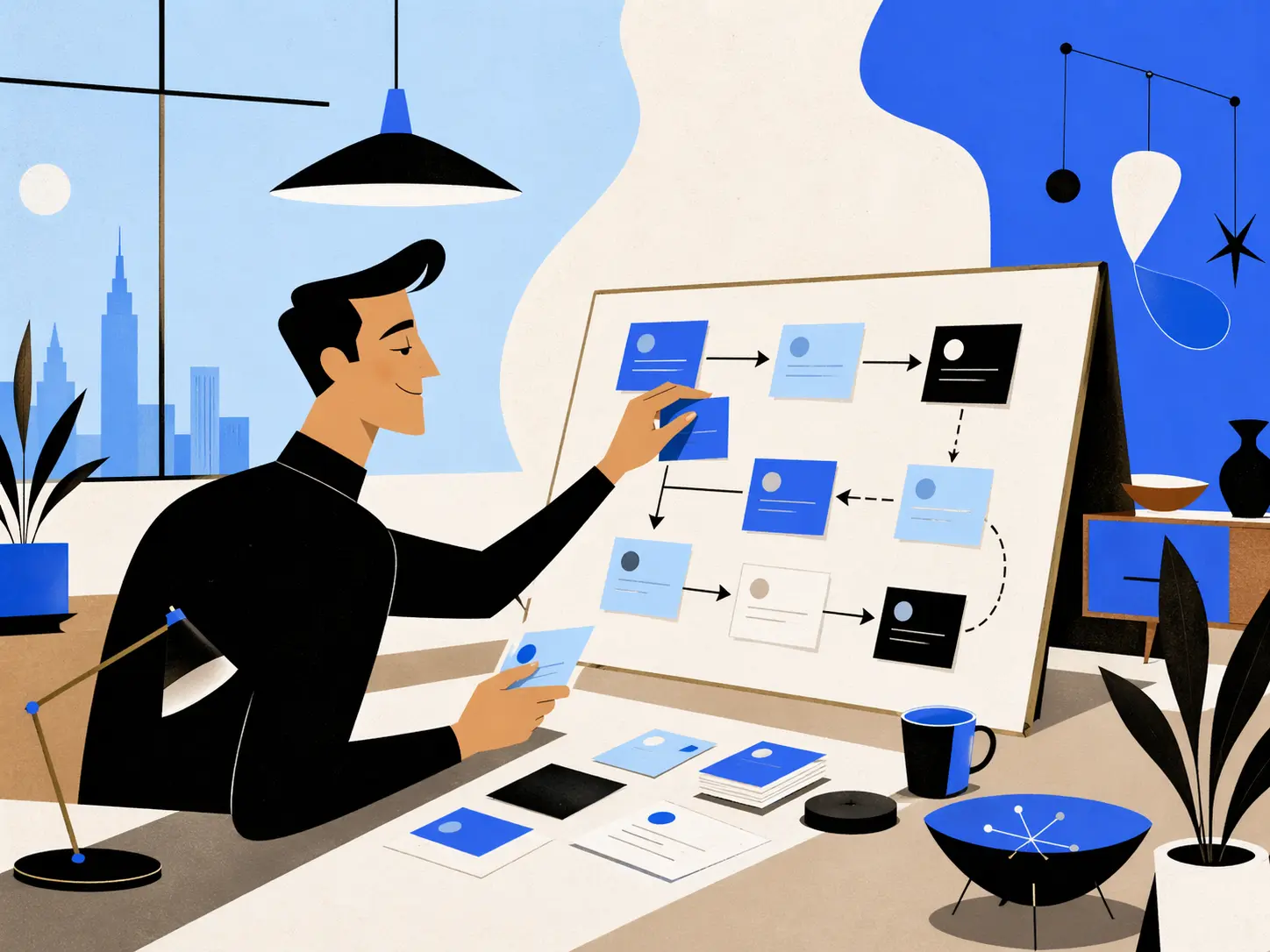
Your MVP must complete an end-to-end loop:
- user starts with a need
- your product resolves it
- user sees value
- you can measure the action
A “demo MVP” shows screens. A real MVP completes the job.
3) “Later lists” that you actually respect
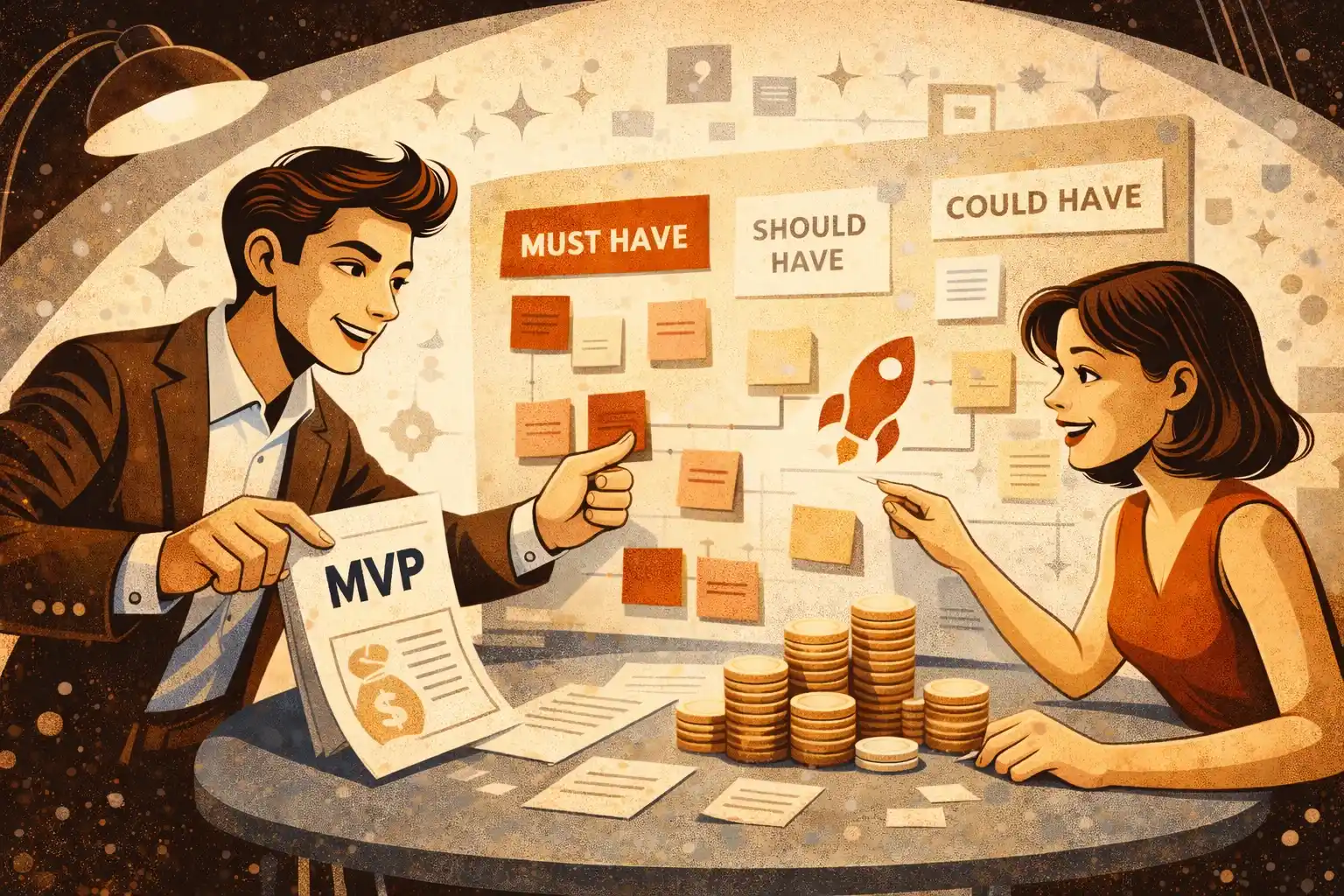
Every feature request must go into one of these buckets:
- MVP (needed to complete the job)
- Post-launch (valuable, but not required to learn)
- Not now (nice-to-have, distracts from the job)
If you don’t create these buckets, your backlog becomes your scope.
A practical way to do this is the method in How to Prioritize Features When You’re Bootstrapping Your Startup.
The MVP scope filter (use this on every feature request)
When someone says “we need X,” run it through three questions:
- Does this feature enable the user to complete the main workflow?
If not, it’s likely post-launch. - Does this feature reduce product risk in the first 30 days?
Risk = nobody uses it, nobody understands it, nobody trusts it, or you can’t measure it. - Can we ship without it and still learn?
If yes, don’t include it in MVP.
This is how you stay fast without being careless.
Edge cases: what to include vs what to postpone
Founders often overbuild edge cases because they imagine support nightmares. In reality, the bigger risk is that you never launch.
Here’s the approach that works:
- Handle edge cases with UX, not features.
Clear error states, “contact support,” and simple guardrails can buy you months. - Build fallback flows, not full systems.
Example: a manual review queue can replace a complex automation layer. - Add “constraints” early.
Limits can be healthy: fewer roles, fewer permissions, fewer integrations.
If you’re unsure how much technical structure you need in MVP, Web App Development for Startups: Architecture Basics for Non-Tech Founders helps set a sane baseline.
The MVP “done” definition (what to agree on before building)
If you don’t define “done,” your MVP becomes an endless project.
A clean “done” definition includes:
- The workflow: what the user can complete end-to-end
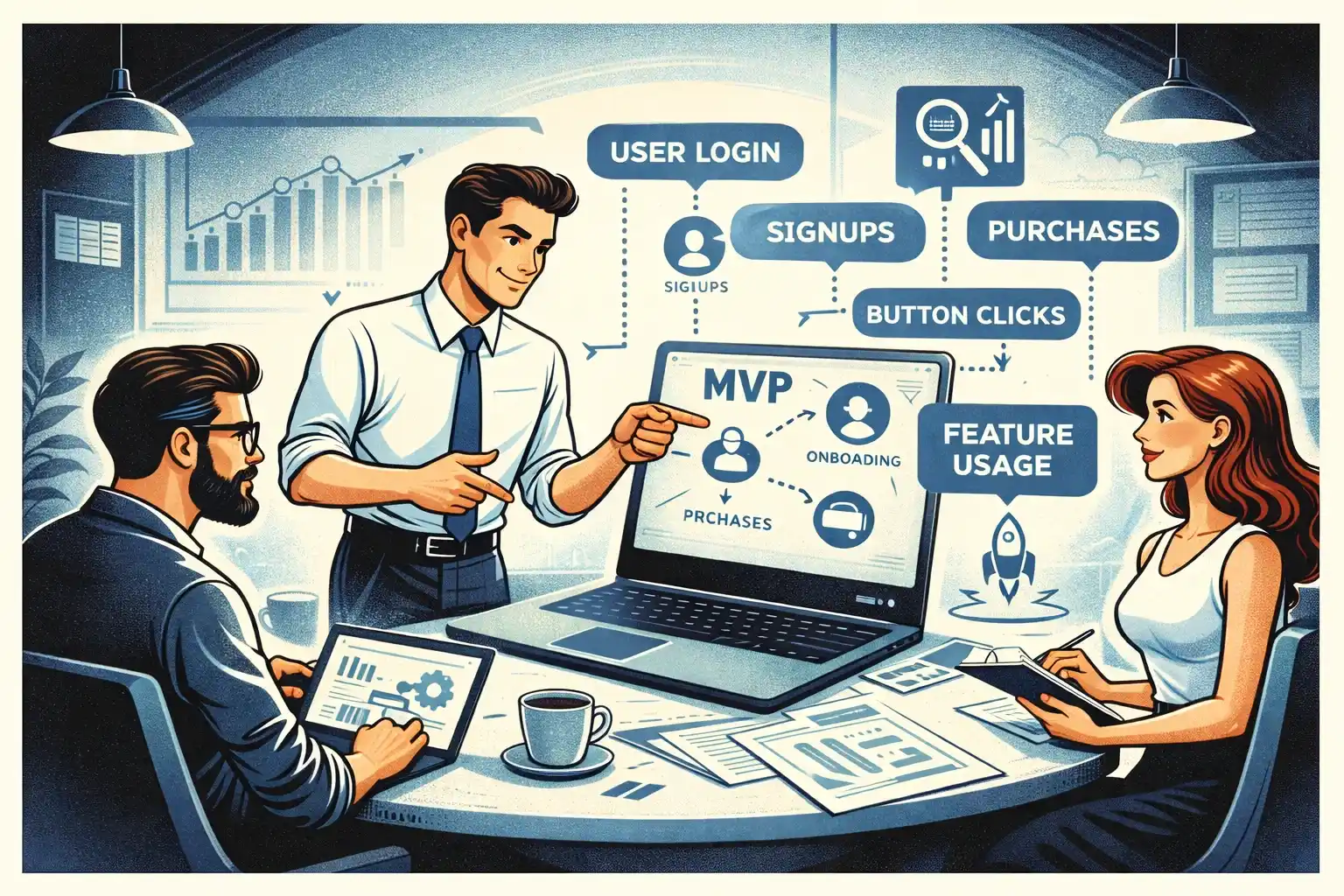
- The measurement: 3–5 events that prove users actually do it
- The release target: one platform first (web or mobile), not everything at once
- The reality check: what you’re intentionally not building yet
If you want a structured view of this from discovery to first traction, read Full-Cycle MVP Development: From Discovery to First Paying Users.
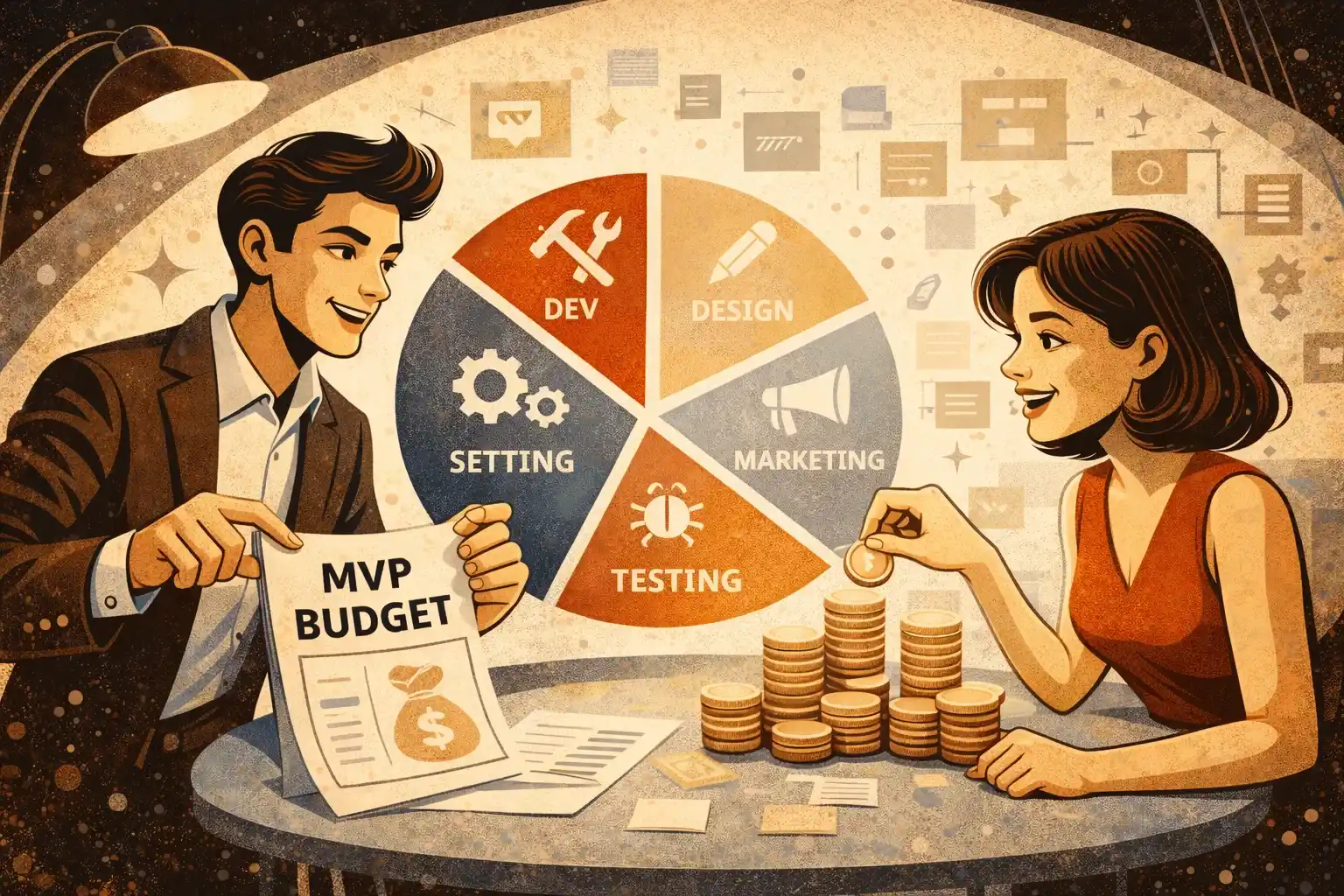
How MVP scope connects to budget (without guessing)
Scope is budget. Always.
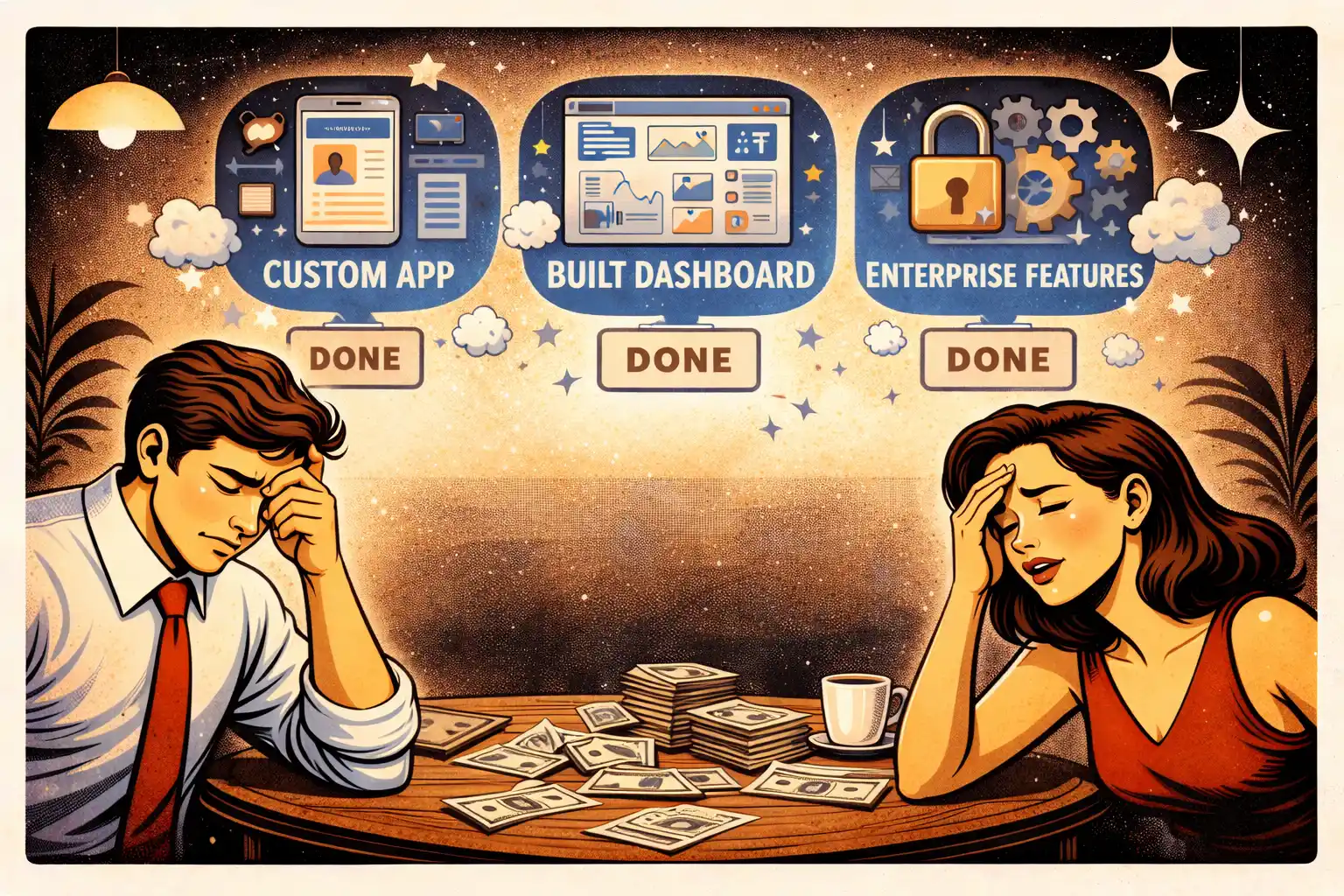
If your MVP is “everything in the vision,” your budget isn’t realistic — it’s emotional.
If your MVP is one workflow, you can price it, build it, and launch it.
If you need a practical budget framing that stays honest, Affordable MVP Development for Startups on a Realistic Budget is the best starting point.
Thinking about building a web or mobile MVP in 2026?
At Valtorian, we help founders design and launch modern web and mobile apps — with a focus on clear MVP scope, real user behavior, and a fast path to a usable first release.
Book a call with Diana
Let’s talk about your idea, scope, and fastest path to a usable MVP.
FAQ
What’s the biggest mistake founders make when scoping an MVP?
Trying to build “the full product” before they’ve proven one workflow creates value. It delays launch and removes learning.
How small is too small for an MVP?
If users can’t complete the core job end-to-end, it’s too small. An MVP must deliver real value, not just show screens.
Should I build web and mobile in the MVP?
Usually no. Pick one platform first to launch faster, reduce QA complexity, and learn sooner. Expand after you see real usage.
How do I handle missing features users ask for?
Write them down, label them post-launch, and measure whether users still complete the main workflow without them. Don’t let opinions override data.
How do I know my MVP scope is “done” and ready to start development?
When you can describe the MVP in one sentence, list one primary workflow, and define success for the first 30 days (what actions prove value).
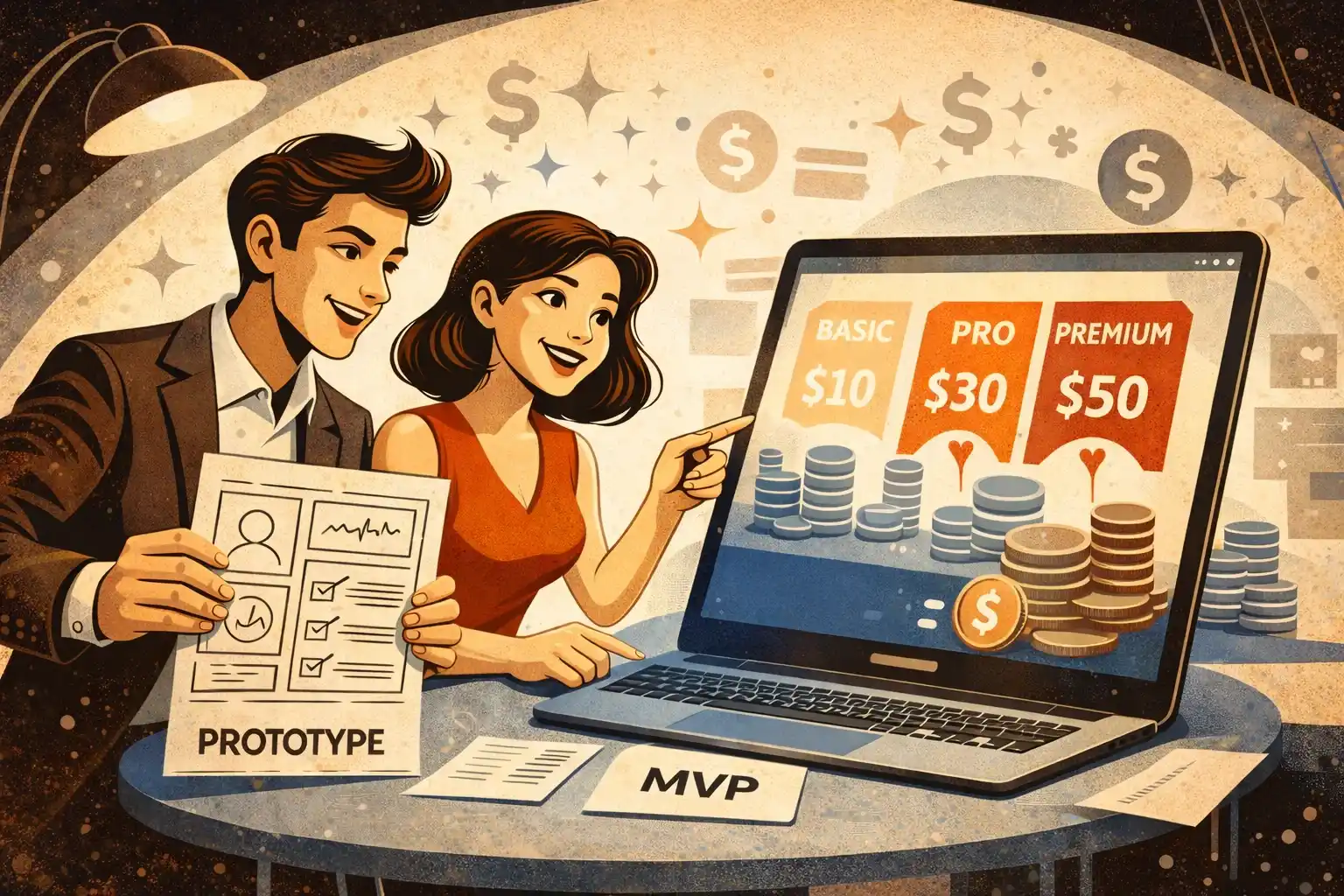
Do I need validation before building?
If you’re unsure about the user, the problem, or willingness to pay — yes. If you already have strong demand signals, you can move straight to a focused MVP.





































.webp)




.webp)