.webp)
From MVP to First Users in 2026
This article shows how to move from a finished MVP to your first real users in 2026—without waiting for perfect growth. You’ll learn what “first users” means, how to pick one acquisition channel, set up a simple activation metric, run a 14-day feedback loop, and decide what to fix versus ignore. It’s written for non-technical founders who need practical steps, not marketing theory, to get traction fast. We also cover lightweight analytics and early pricing experiments.

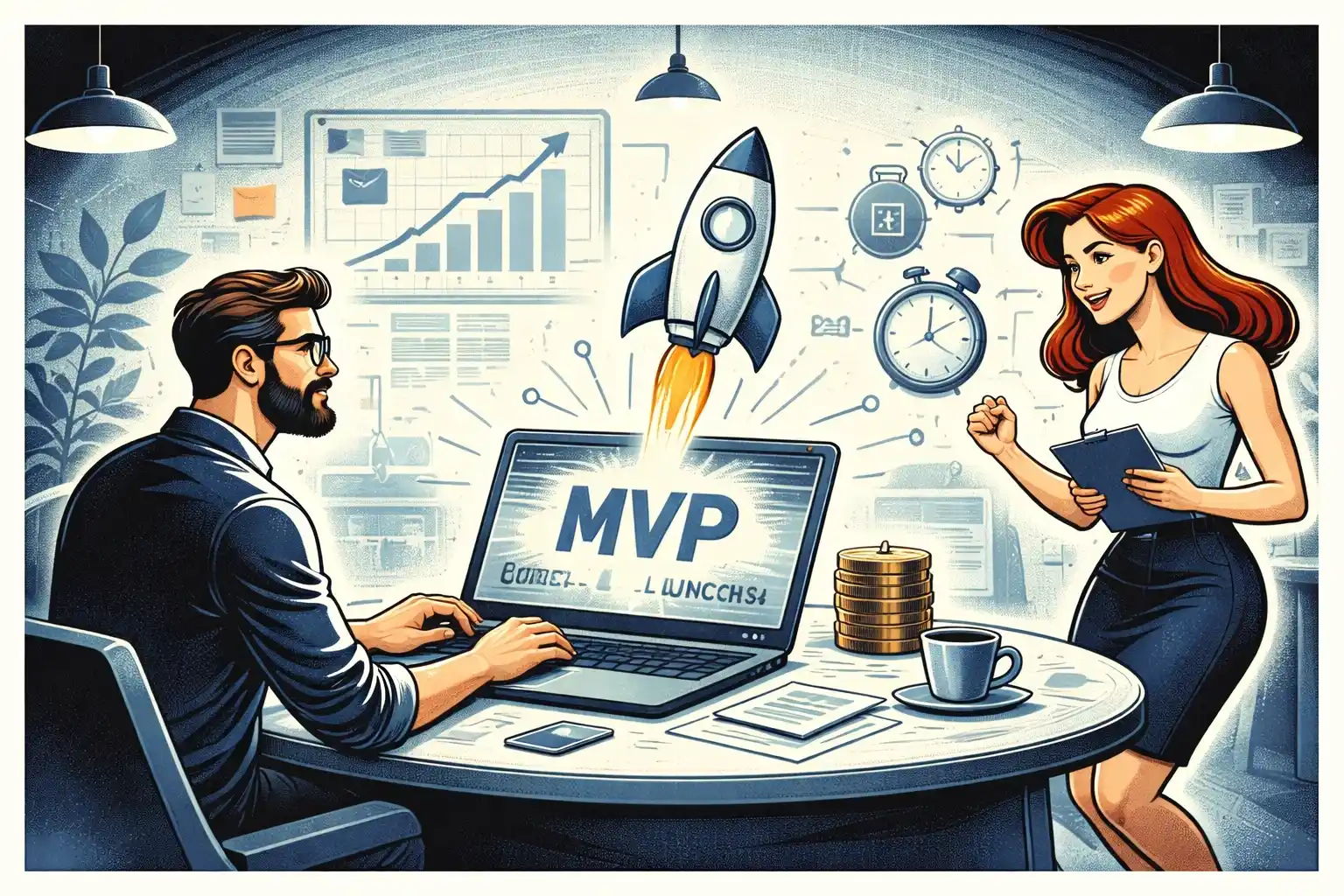
TL;DR: Your MVP isn’t “launched” when it’s live—it’s launched when real users complete one meaningful action.In 2026, the fastest path is simple: pick one channel, define one activation metric, and run a 14-day loop of onboarding + fixes + feedback.
First users are not “sign-ups”
In practice, your first users are the people who reach the “aha” moment and would be disappointed if the product disappeared.
A signup is a hope. A first user is proof.
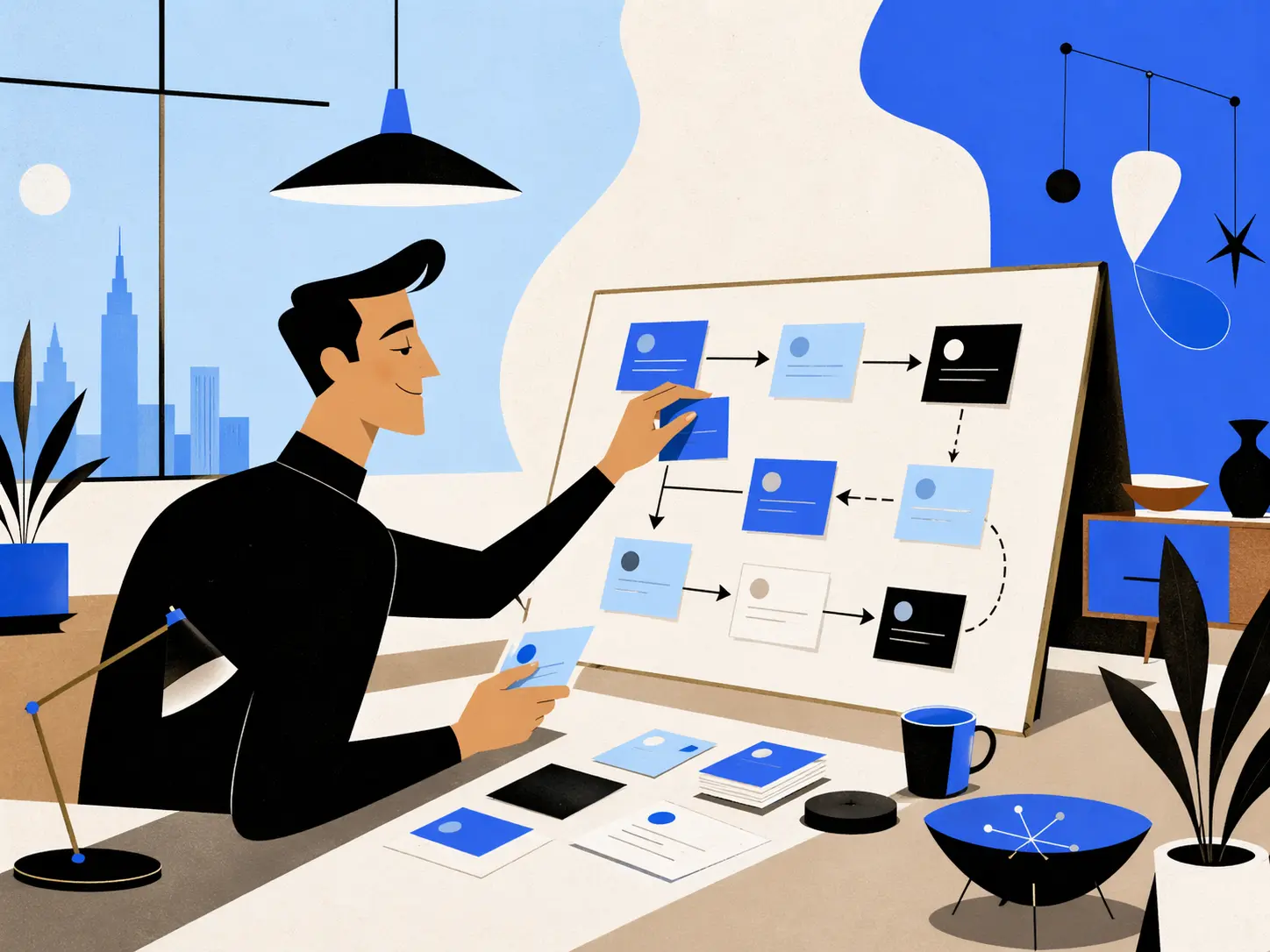
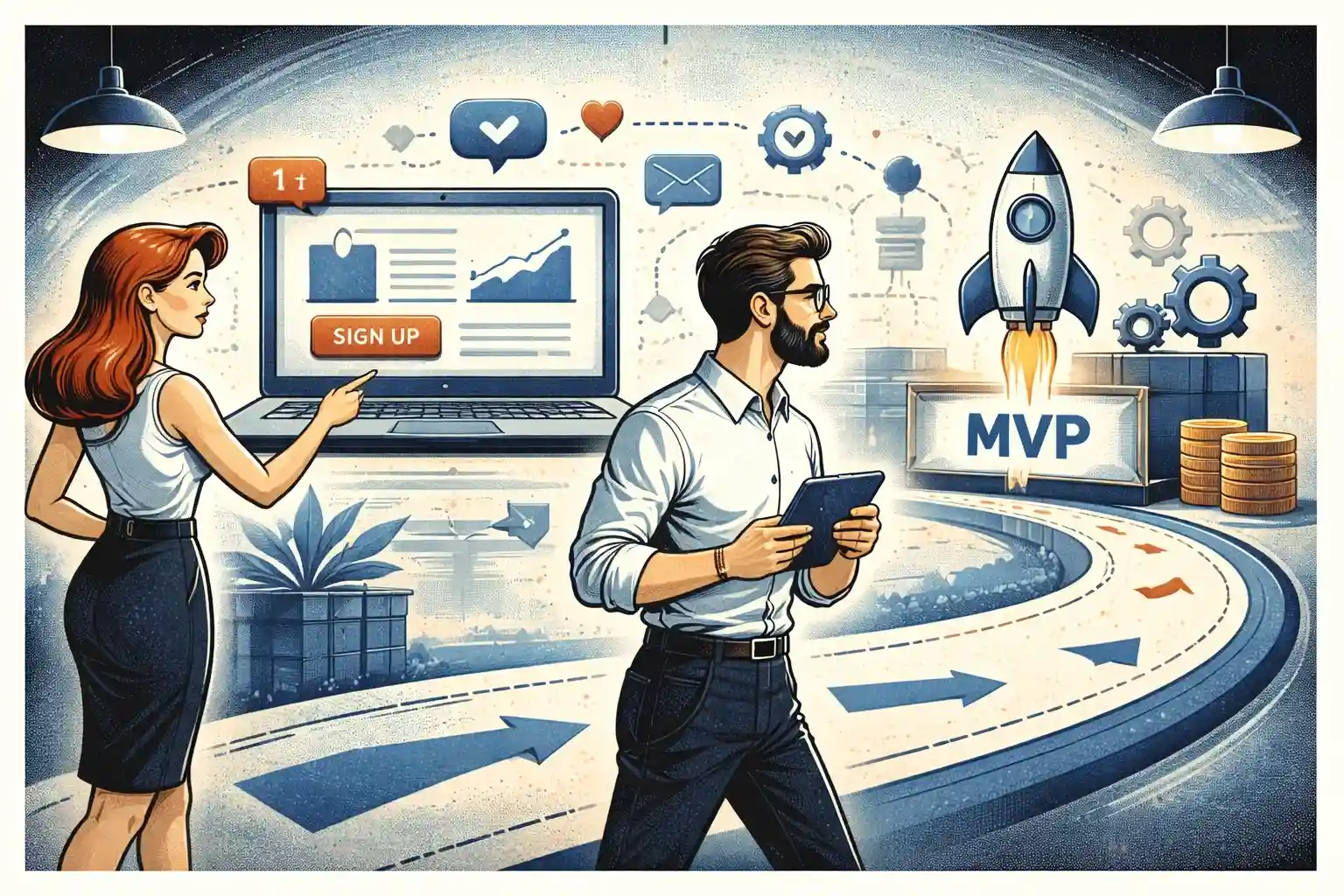
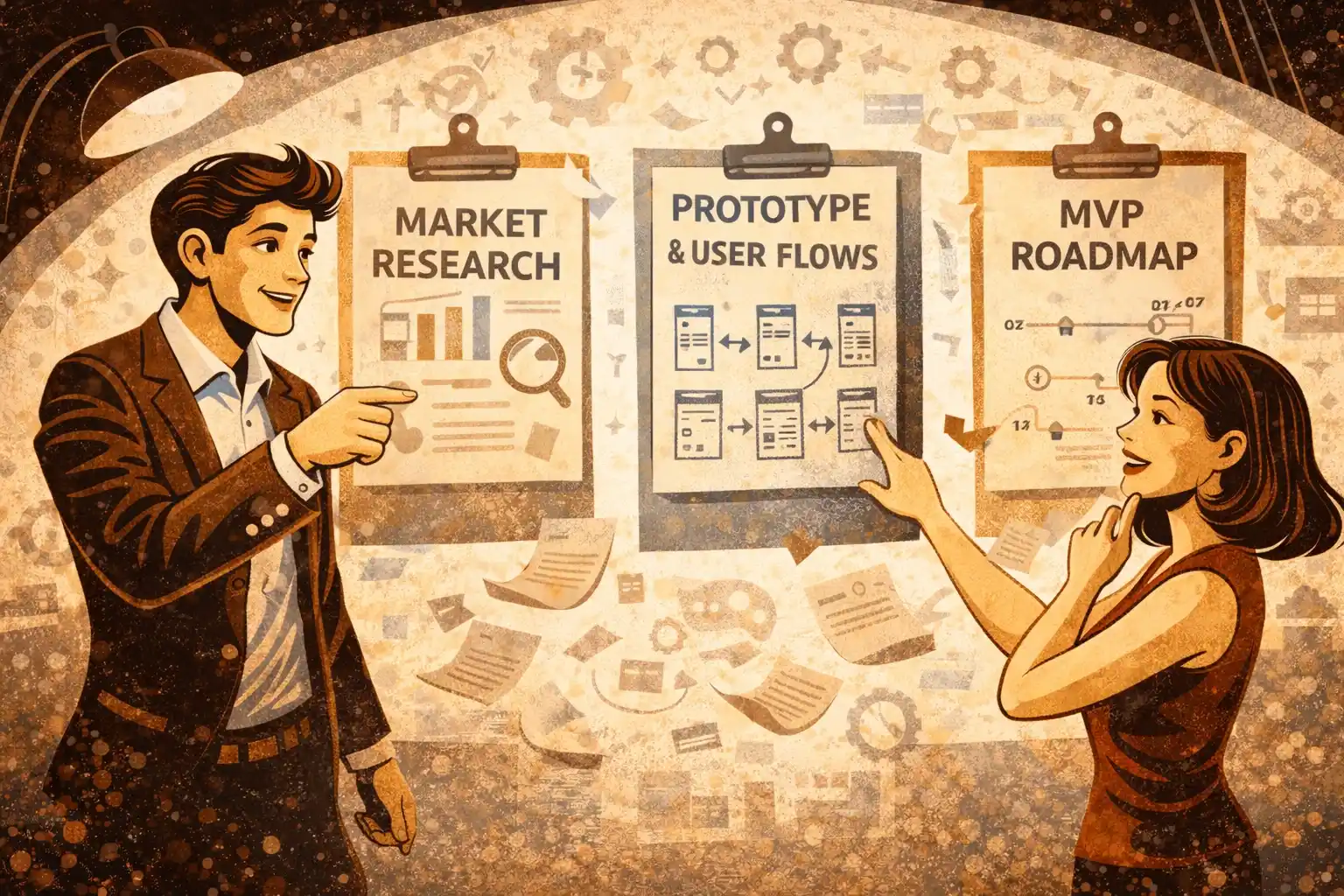
If you already built the MVP, your job now is to create a repeatable path from:
- a clear target person
- to a first interaction
- to one meaningful outcome
If your MVP still feels fuzzy, revisit Choosing an MVP Development Company as a Non-Technical Founder to pressure-test whether the scope is actually “smallest useful.”
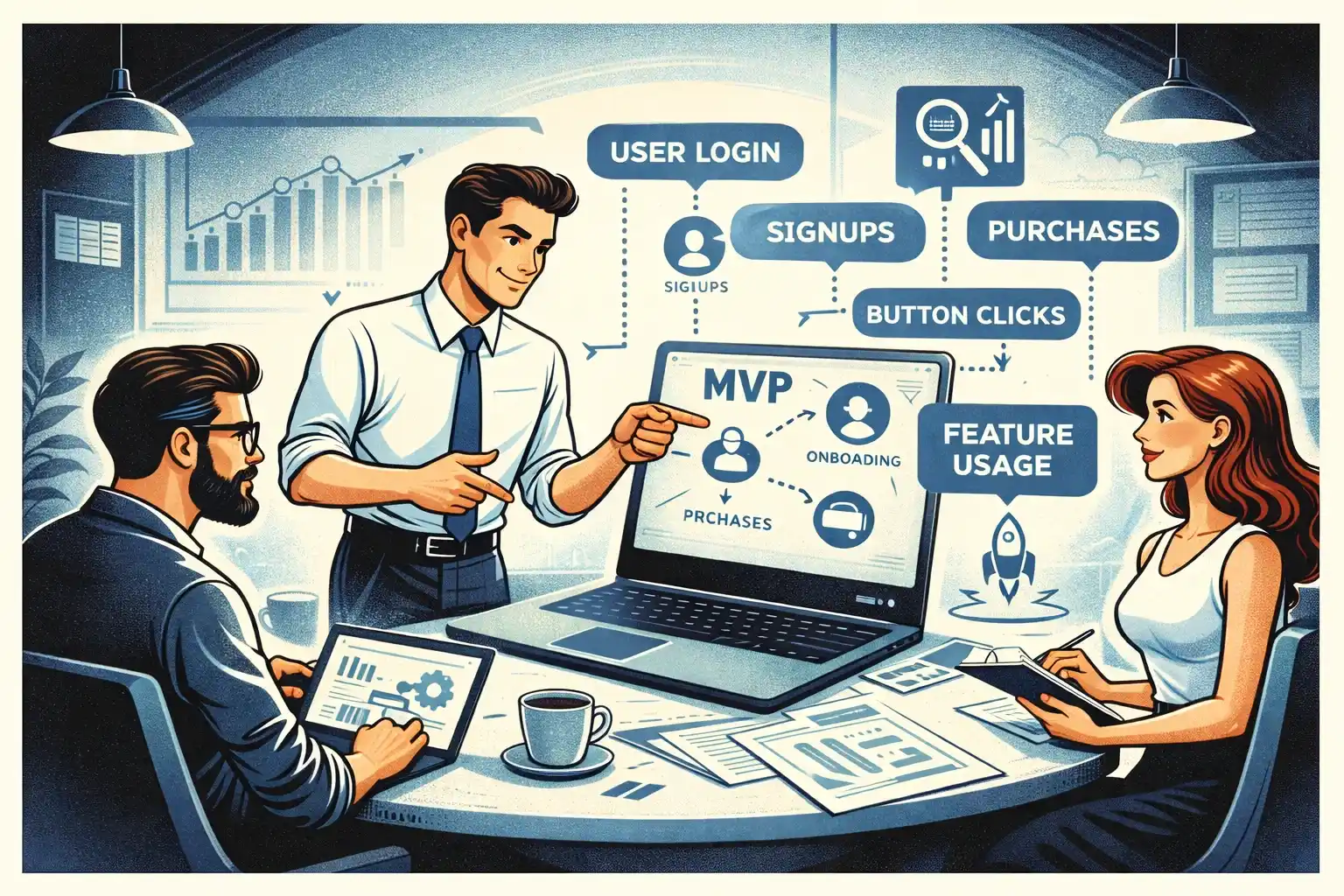
Define the one action that proves value
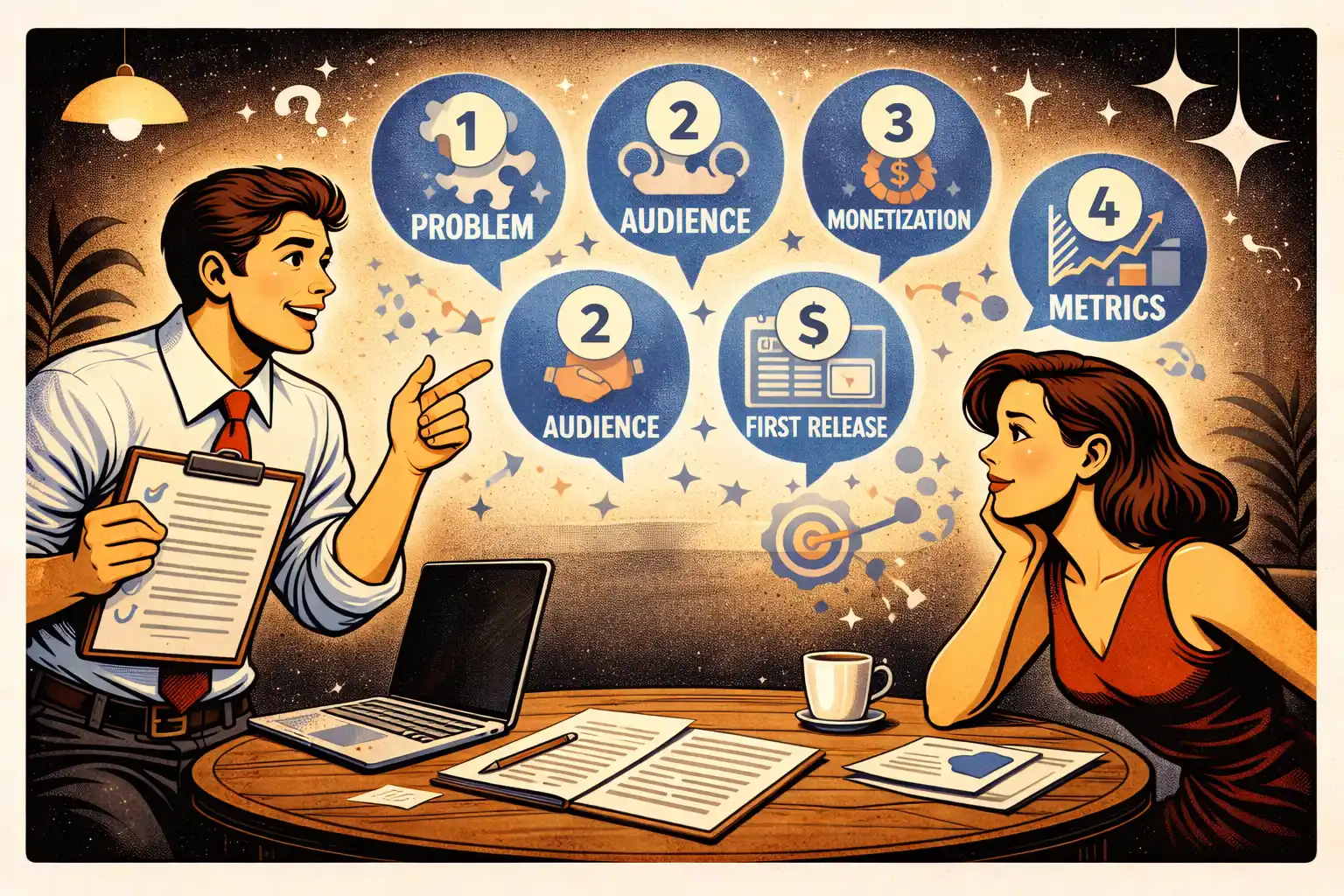
Before you chase traffic, decide what “success” looks like in the first 5–10 minutes.
Examples (keep it product-specific):
- a marketplace: posting the first listing OR sending the first inquiry
- a SaaS dashboard: connecting the first data source and seeing the first insight
- a mobile app: completing the first setup flow and using one core feature
This is your activation metric. One event. One definition.
If you want a founder-friendly way to map that to analytics, use Your First Product Metrics Dashboard: What Early-Stage Investors Want to See.
Pick one channel you can actually execute for 30 days
Most MVPs fail at this point because founders spread effort across five channels and don’t learn anything.
Choose one primary channel based on your product type:
If you’re B2B
- warm intros (friends, ex-colleagues, communities)
- targeted outbound (small list, highly specific)
- partner distribution (tools/consultants who already have your buyers)
If you’re B2C
- short-form content + a single call-to-action
- ASO + small keyword focus
- micro-influencers (small audience, high trust)
If you need a structured launch mindset (fast, but not chaotic), see How to Launch an App in Weeks: Fast MVP and First Version Launch Framework.
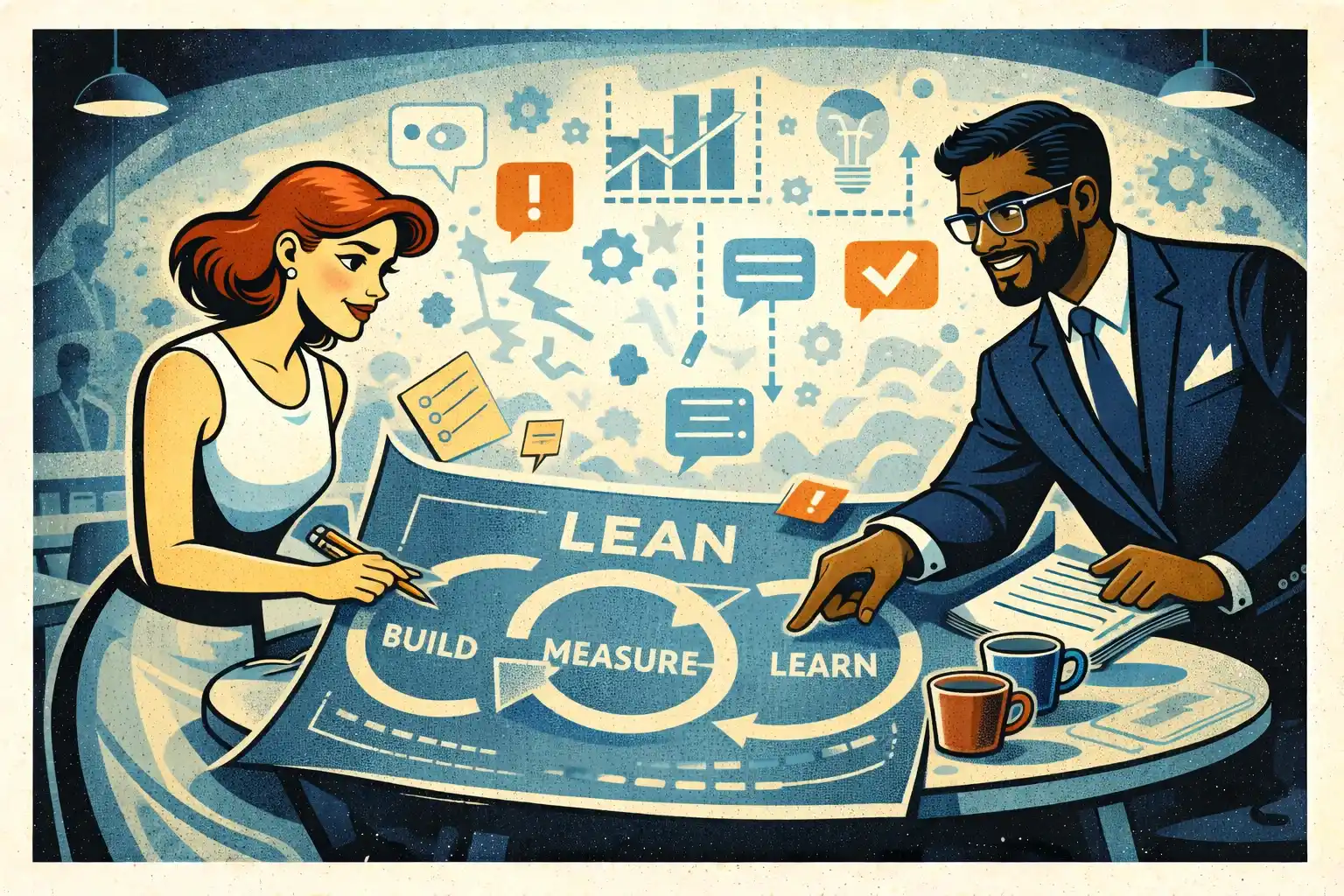
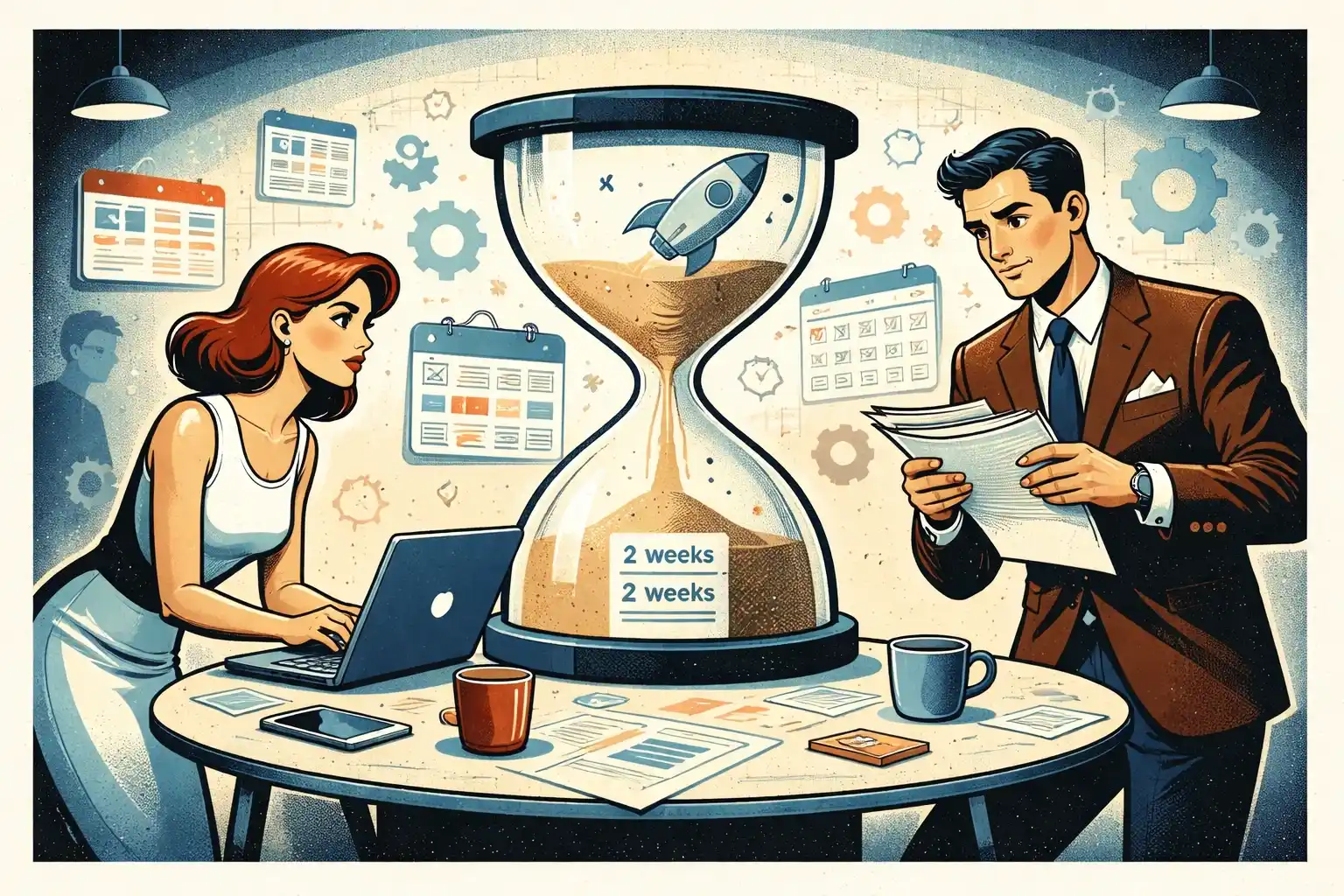
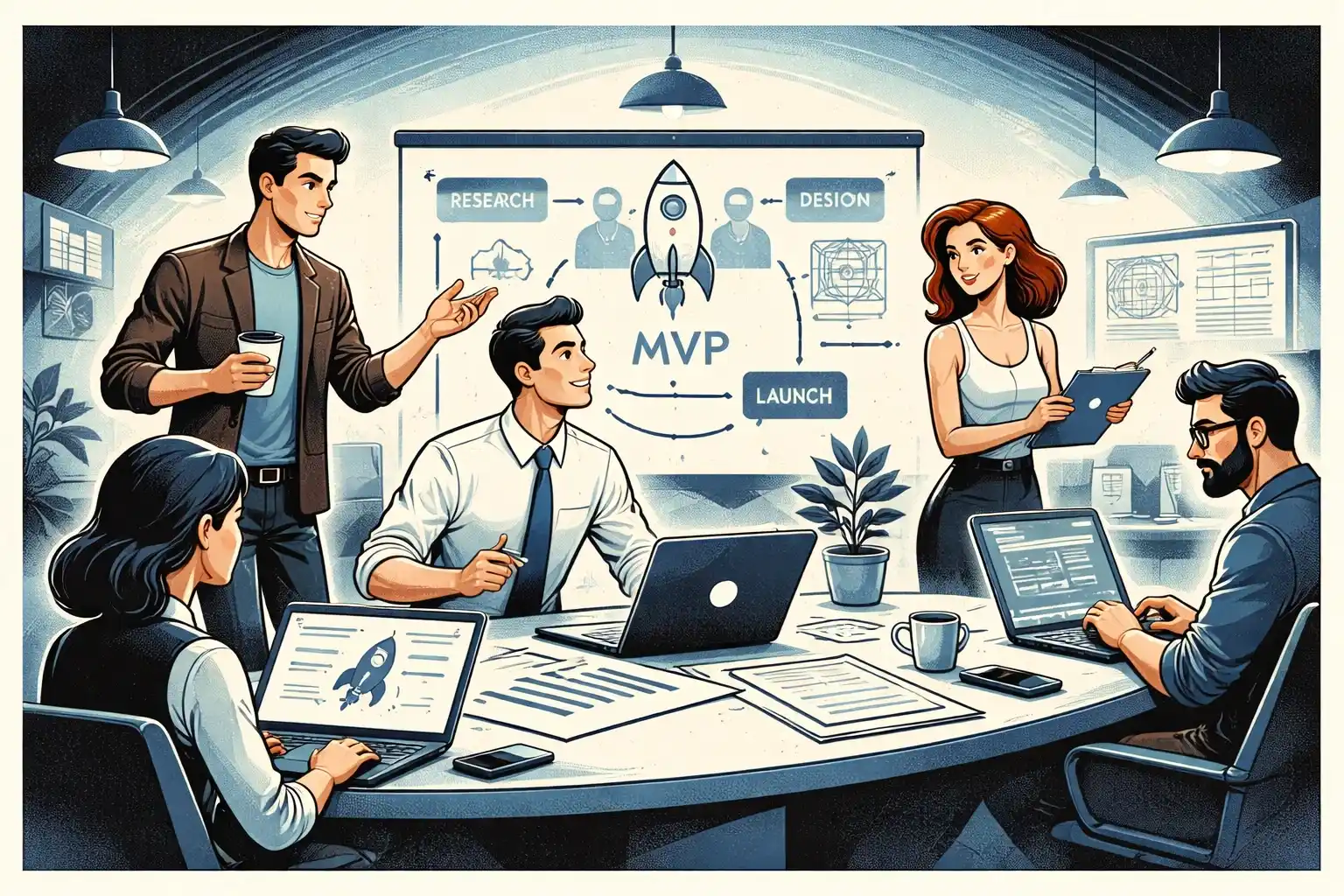
Run a 14-day “first users” loop (the 2026 version)
You don’t need a big campaign. You need tight cycles.
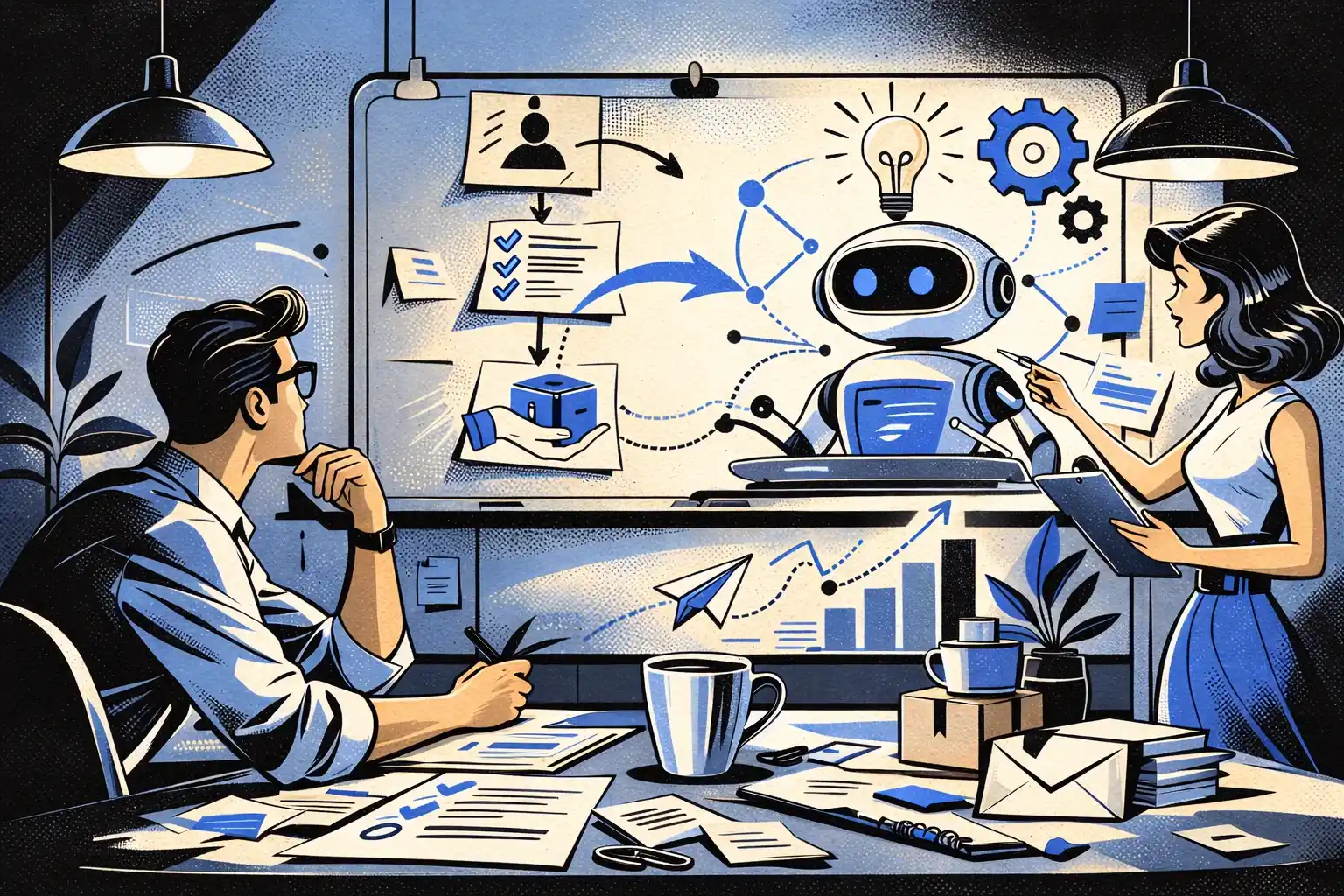
Days 1–3: Onboard manually
Aim for 10–20 people, not 1,000.
- personally message them (or schedule short calls)
- watch where they get stuck
- collect the same 3 questions every time: “Why now?”, “What were you doing before?”, “What almost made you quit?”
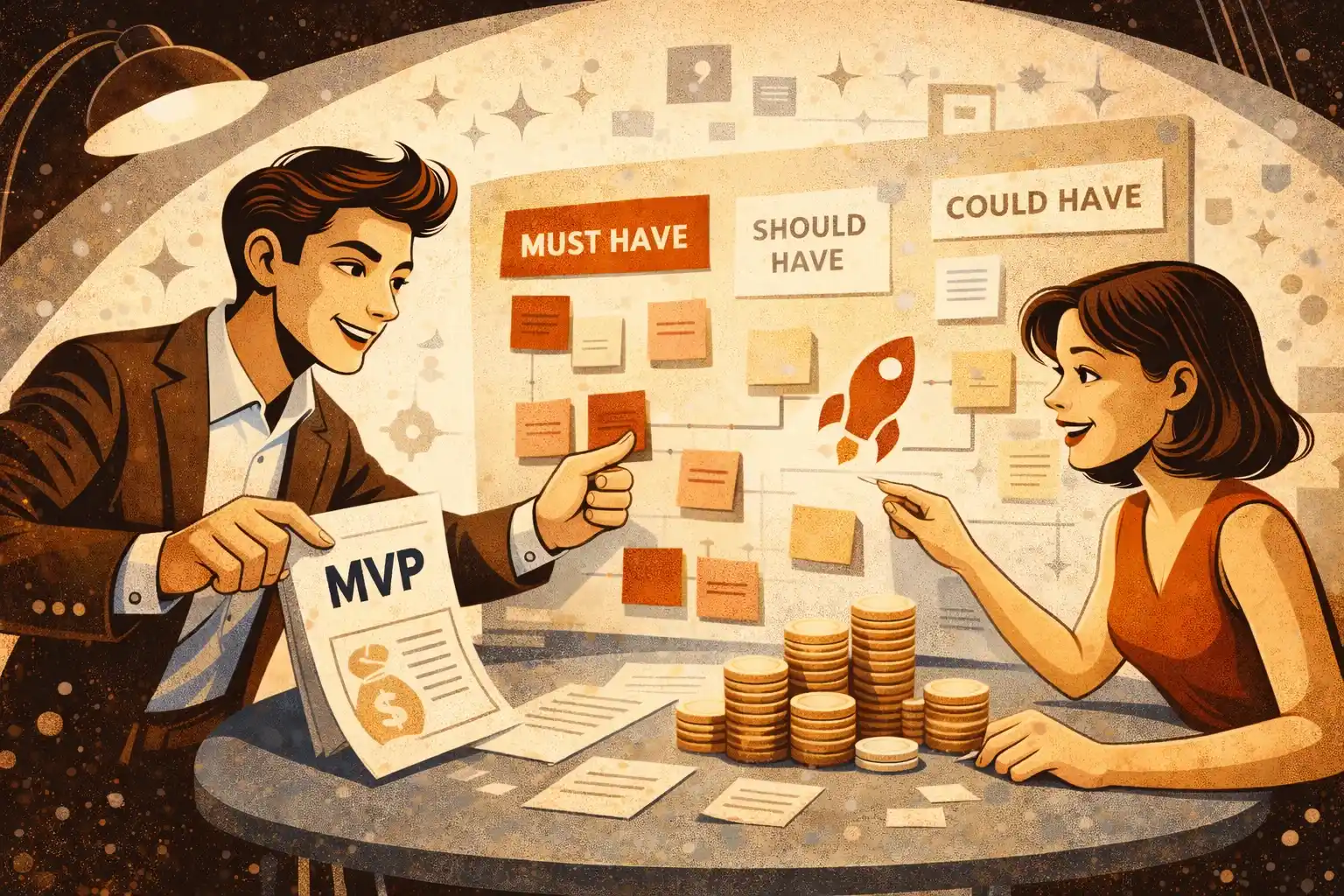
Days 4–10: Fix only what blocks activation
Your backlog will explode. Ignore most of it.
Fix:
- broken flows
- confusing copy
- missing defaults
- crashes and performance issues
Delay:
- “nice-to-have” features
- edge cases from non-target users
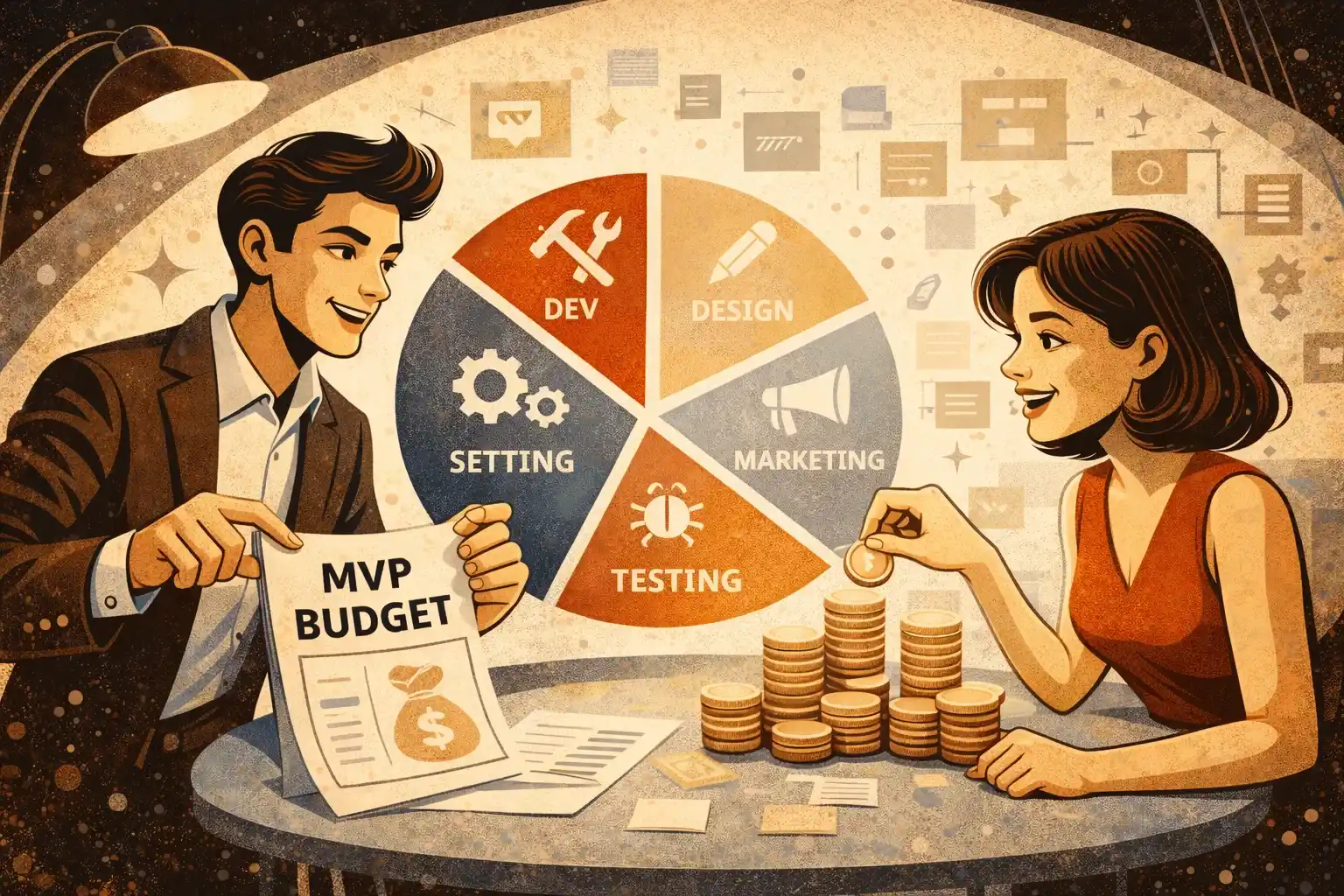
- advanced settings and customization
If you feel tempted to keep adding features, re-read How to Prioritize Features When You’re Bootstrapping Your Startup.
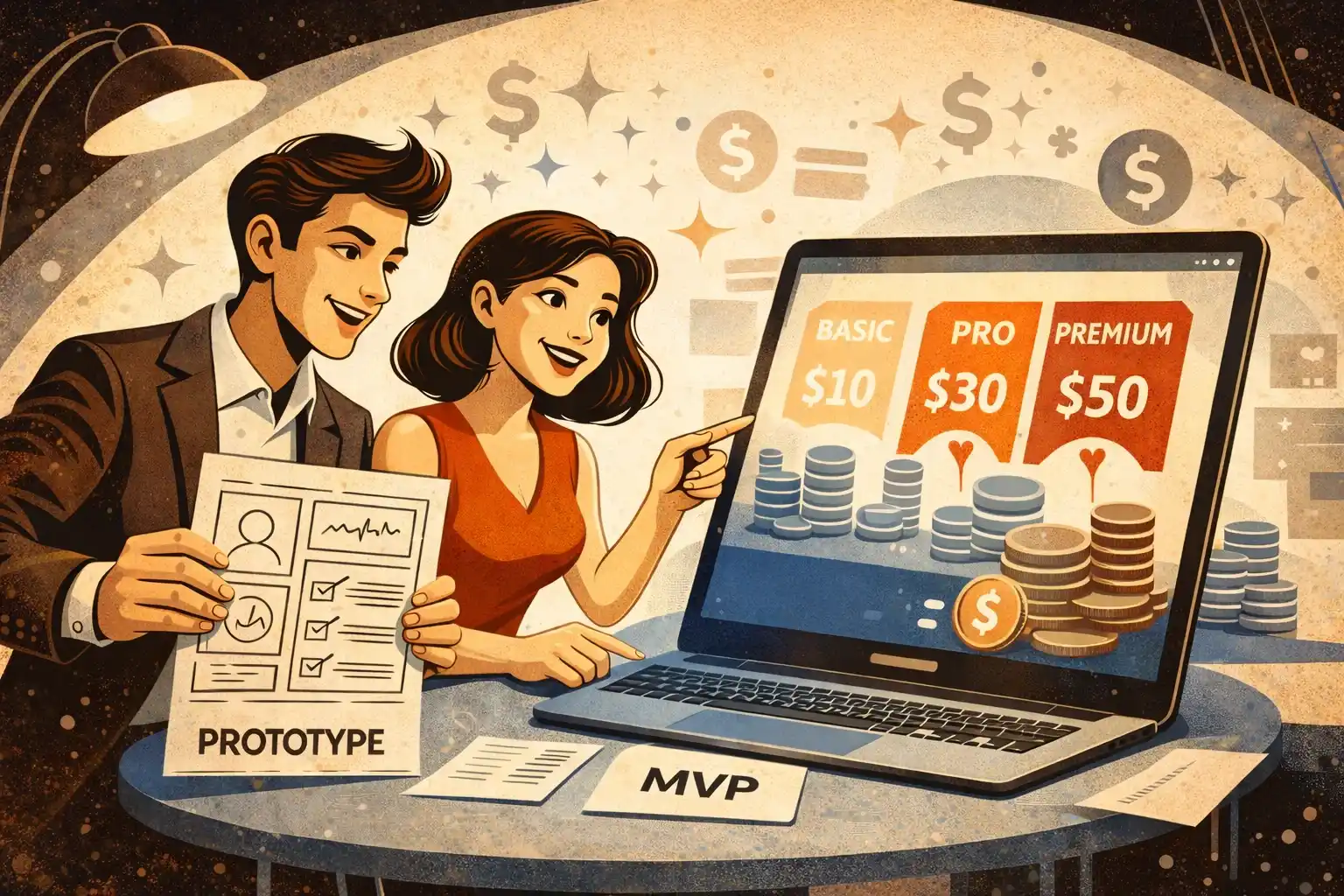
Days 11–14: Test a simple pricing and retention signal
You’re not trying to “maximize revenue” yet. You’re trying to learn if anyone values the outcome.
Pick one:
- paid pilot (B2B)
- early adopter monthly price (B2C)
- waitlist + commitment deposit (in some categories)
Even a small willingness-to-pay signal changes how you build next.
What to build next (after the first users appear)
Once you have a handful of users reaching activation, the next step is not “more features.” It’s tightening the funnel.
Focus on:
- shortening time-to-value
- removing friction in onboarding
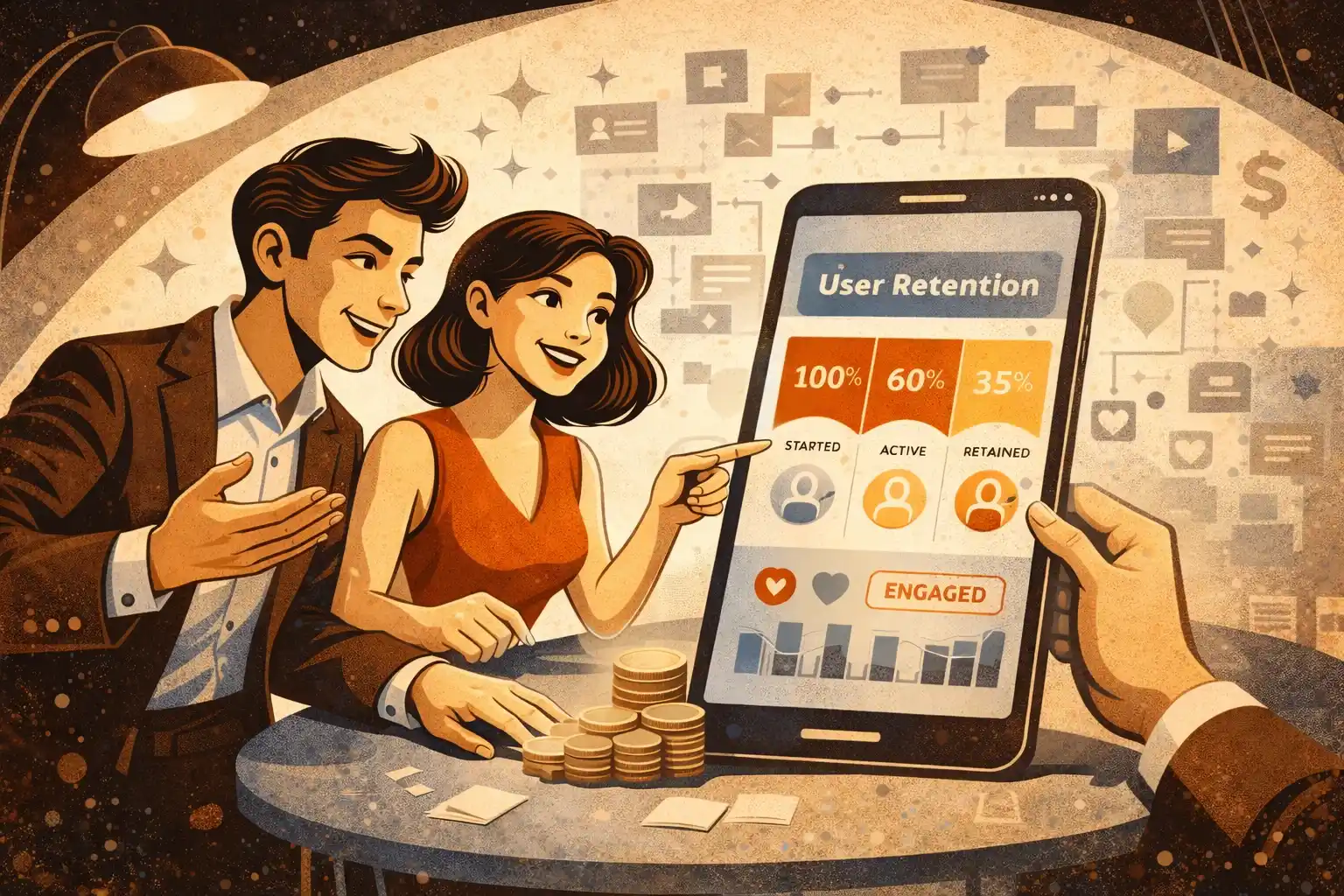
- improving one retention driver (notifications, reminders, saved state, recurring workflow)
- documenting the repeatable acquisition path
That’s how you go from “a working MVP” to “a product with traction.”
Common mistakes that slow down first traction
- Launching to “everyone” instead of one clear niche
- Measuring vanity metrics (visits, downloads) instead of activation
- Treating feedback as a wishlist instead of a pattern
- Building growth features before the core outcome works
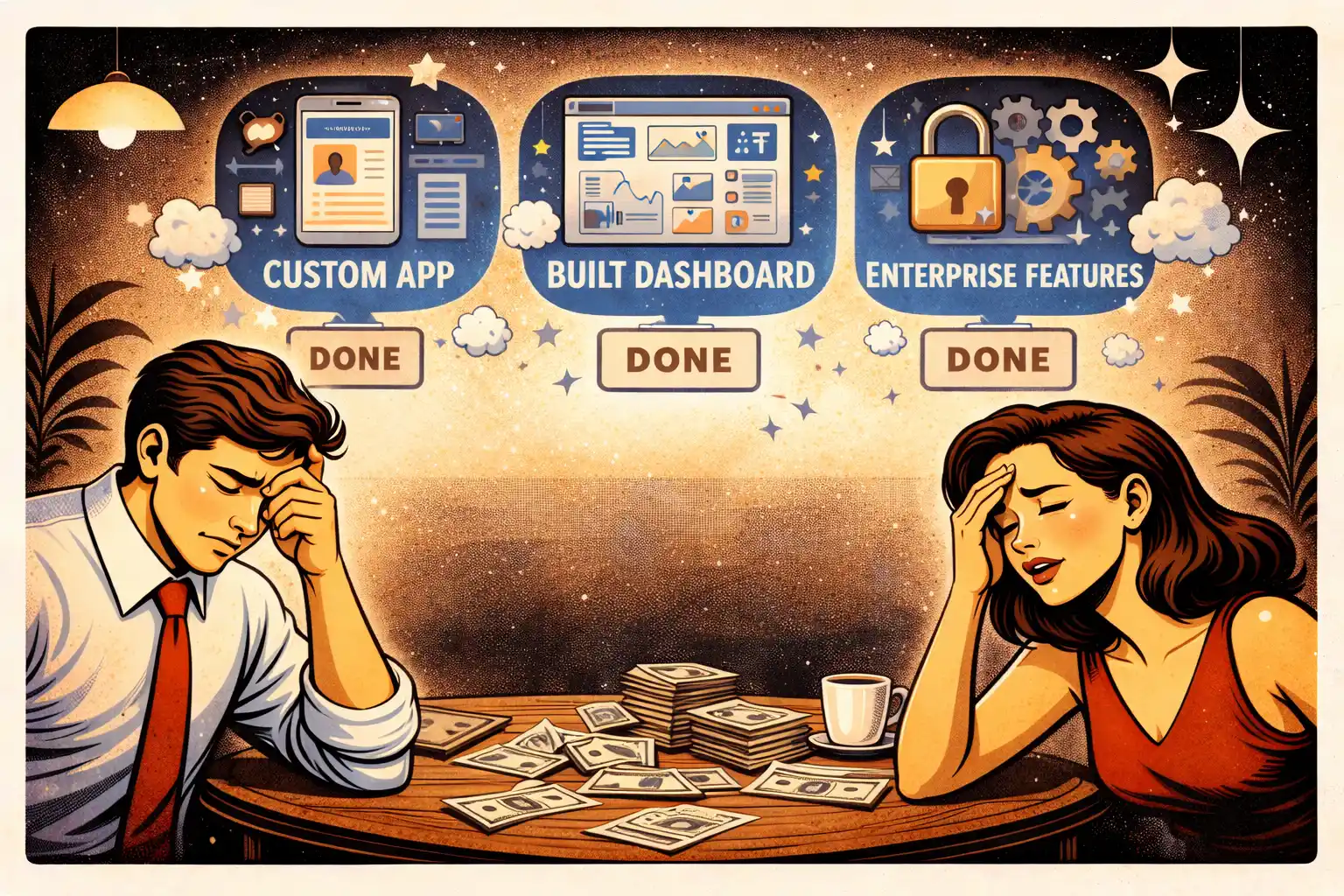
- Waiting for the product to feel “done”
If you want the full end-to-end picture beyond this stage, read Full-Cycle MVP Development: From Discovery to First Paying Users.
Thinking about launching your MVP and getting first users in 2026?
At Valtorian, we help founders design and launch modern web and mobile apps — with a focus on real user behavior, not “perfect v1” checklists.
Book a call with Diana
Let’s talk about your idea, scope, and the fastest path to a usable MVP that can reach real users.
FAQ
How many “first users” do I need before I scale marketing?
Usually 10–30 activated users is enough to see patterns. If you can’t get those, scaling traffic will only scale confusion.
What if users like the idea but don’t finish onboarding?
Treat it as a product problem first: unclear promise, too many steps, missing defaults, or the wrong target audience.
Should I build referrals or virality into the MVP?
Not until activation is strong. Growth loops work only when the core outcome is already reliable.
When do I invest in analytics setup?
Before you push for traction. Keep it minimal, but make sure activation and core actions are tracked from day one.
How do I decide what feedback to ignore?
Ignore anything from users outside your target niche, and anything that doesn’t block activation or retention in the first 14 days.
What’s a realistic timeline to get first users in 2026?
If the MVP is ready, many founders can reach first activated users in 2–4 weeks with focused outreach and fast iteration.





























.webp)




.webp)