.webp)
Healthcare Startup Challenges in 2026
Healthcare startups can win fast in 2026, but the bar is higher than in most markets: trust is harder to earn, workflows are messy, and “it works” isn’t enough when real people and real risk are involved. This article breaks down the most common challenges founders run into—compliance and privacy, clinical workflow reality, integrations, data quality, AI expectations, reimbursement and sales cycles, and user adoption. You’ll also get practical ways to de-risk the first version without overbuilding.

TL;DR: In 2026, most healthcare startups don’t fail because the idea is bad—they fail because trust, workflow fit, and compliance are treated as “later.” The smartest path is to ship a narrow MVP that fits one real workflow, proves measurable value, and only then expands into integrations, AI features, and broader audiences.
The real problem: healthcare is not one market
Founders often say “we’re building for healthcare,” but healthcare is a bundle of different worlds:
- Patients who want clarity, speed, and reassurance.
- Clinicians who want zero extra clicks.
- Admins who want fewer calls, fewer denials, and fewer surprises.
- Payers who want evidence and cost reduction.
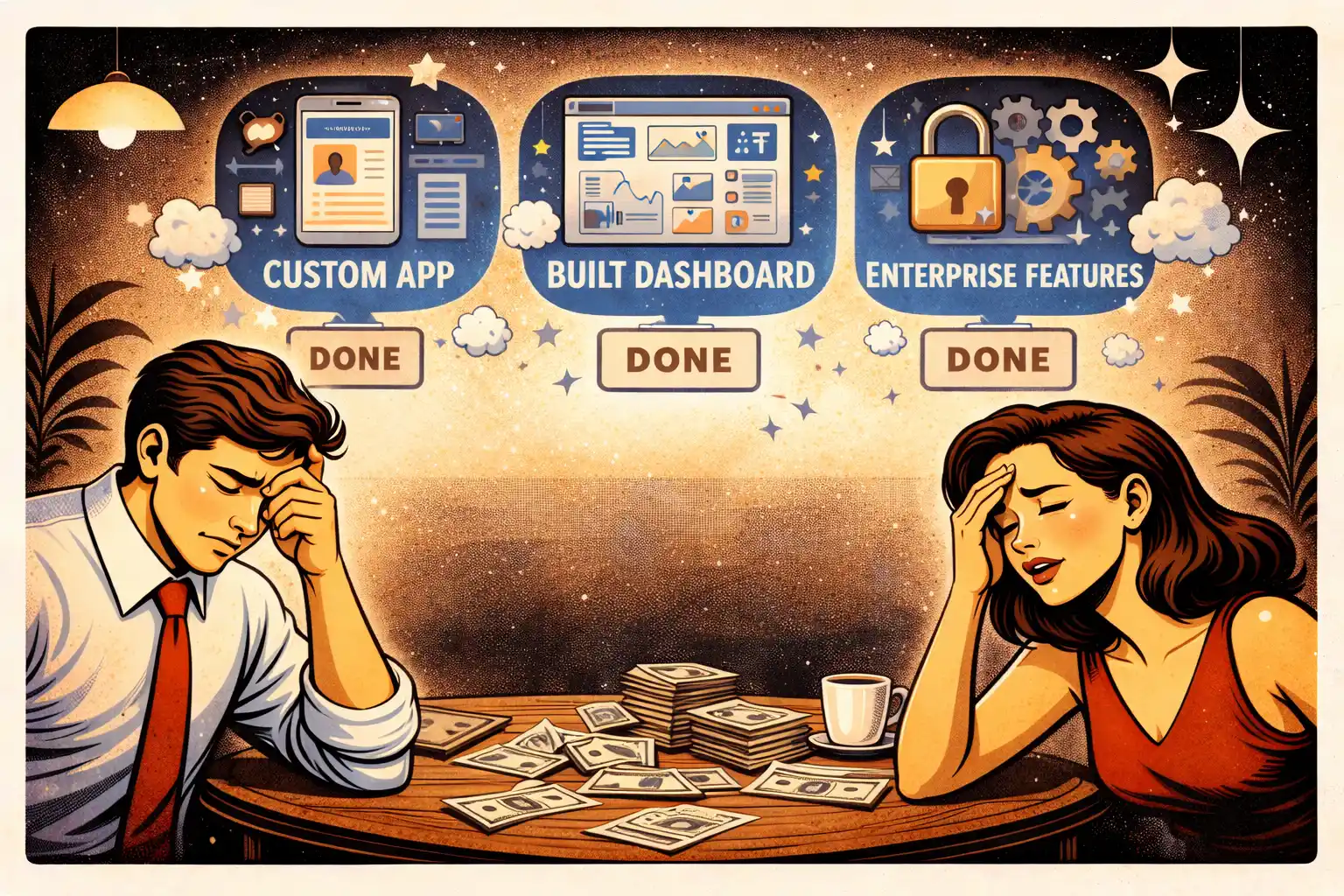
If you try to satisfy everyone in v1, you’ll ship something generic that nobody adopts.
A better starting question is: Which single workflow are we improving, for which role, in which setting? (Primary care? Outpatient clinic? Home health? Wellness? Employer benefits?) Your MVP becomes dramatically simpler when you commit to one.
If you’re unsure how to scope that first workflow without going technical, start with MVP Development for Non-Technical Founders: 7 Costly Mistakes.
Challenge 1: trust is a product feature
In many markets, users will “try it and see.” In healthcare, users ask: Can I trust you with my data and my decisions?
Trust shows up in small things:
- Clear language about what the product does—and what it doesn’t do.
- Consistent UI and no “prototype vibes.”
- Fewer surprises around permissions, notifications, and data use.
- Safety rails when users are stressed or confused.
A common mistake is treating trust as branding. In healthcare, trust is also UX, content, and product behavior.
Challenge 2: compliance isn’t optional — even for MVPs
You don’t need to become a compliance expert overnight, but you do need to avoid the “we’ll figure it out later” trap.
What changes in healthcare:
- You may handle sensitive health data.
- You may have to meet security and privacy expectations earlier.
- You may need clear disclaimers and boundaries (especially with AI).
The practical approach is to define the data boundary in v1:
- What data do we really need to deliver value?
- Where does it live?
- Who can access it?
- How do we delete it?
Start simple: minimize stored data, limit roles and permissions, and avoid unnecessary data collection.
If your product is patient-facing or touches clinical workflows, Healthcare App Development for Startups: MVP and Compliance Basics will save you from painful rework.
Challenge 3: workflows are messy and full of exceptions
Healthcare doesn’t run on clean, linear user journeys. People miss appointments. Staff are overloaded. Patients don’t read instructions. Devices don’t sync. A “perfect flow” in Figma breaks the moment it meets reality.
Your MVP should be designed around exceptions:
- What happens when a patient doesn’t respond?
- What if data is missing?
- What if the clinic does the process slightly differently?
Founders often underestimate how much adoption depends on handling edge cases gracefully. A product that supports the messy middle will beat a “beautiful” product that fails under pressure.
Challenge 4: integrations can eat your whole roadmap
Everyone wants integrations: EHRs, labs, pharmacy, billing, wearable devices, scheduling, identity providers.
The trap is building integrations before you have proof that the core workflow delivers value. Integrations are expensive because:
- Each system has its own constraints.
- Data fields don’t map cleanly.
- Permissions and security reviews slow everything down.
A safer sequence:
- Prove value with a manual or semi-manual workflow (even if it’s not perfect).
- Identify which integration removes the most friction.
- Integrate one system first and measure the impact.
If you’re building a product that will need integrations, a clear architecture early helps you avoid rewrites later. See Web App Development for Startups: Architecture Basics for Non-Tech Founders.
Challenge 5: AI expectations are higher—and riskier
In 2026, “AI-powered” is not a differentiator by itself. Users expect:
- Accuracy where it matters.
- Transparency when it’s uncertain.
- A clear boundary between “suggestion” and “clinical decision.”
The fastest way to lose trust is to ship AI outputs that feel confident but unreliable.
A practical AI approach for early-stage healthcare products:
- Use AI for drafts, triage, summaries, categorization, and admin work.
- Keep humans in the loop for decisions with clinical impact.
- Add confidence cues and safe fallback paths.
If you’re weighing whether AI should be core or supportive in your MVP, AI Development Agency vs Classic Development: What’s the Difference for Founders? can help you choose the right role for AI.
Challenge 6: selling in healthcare takes longer than you think
Even when your product is great, selling into healthcare is slow:
- More stakeholders.
- Procurement and security reviews.
- “We already have a system for that.”
- Budget cycles.
This is why many founders succeed by starting with a wedge:
- A small department.
- A single clinic.
- A narrowly defined use case that shows measurable improvement.
Your MVP should produce a result that a buyer can defend internally: reduced no-shows, faster intake, fewer phone calls, fewer manual steps, cleaner documentation.
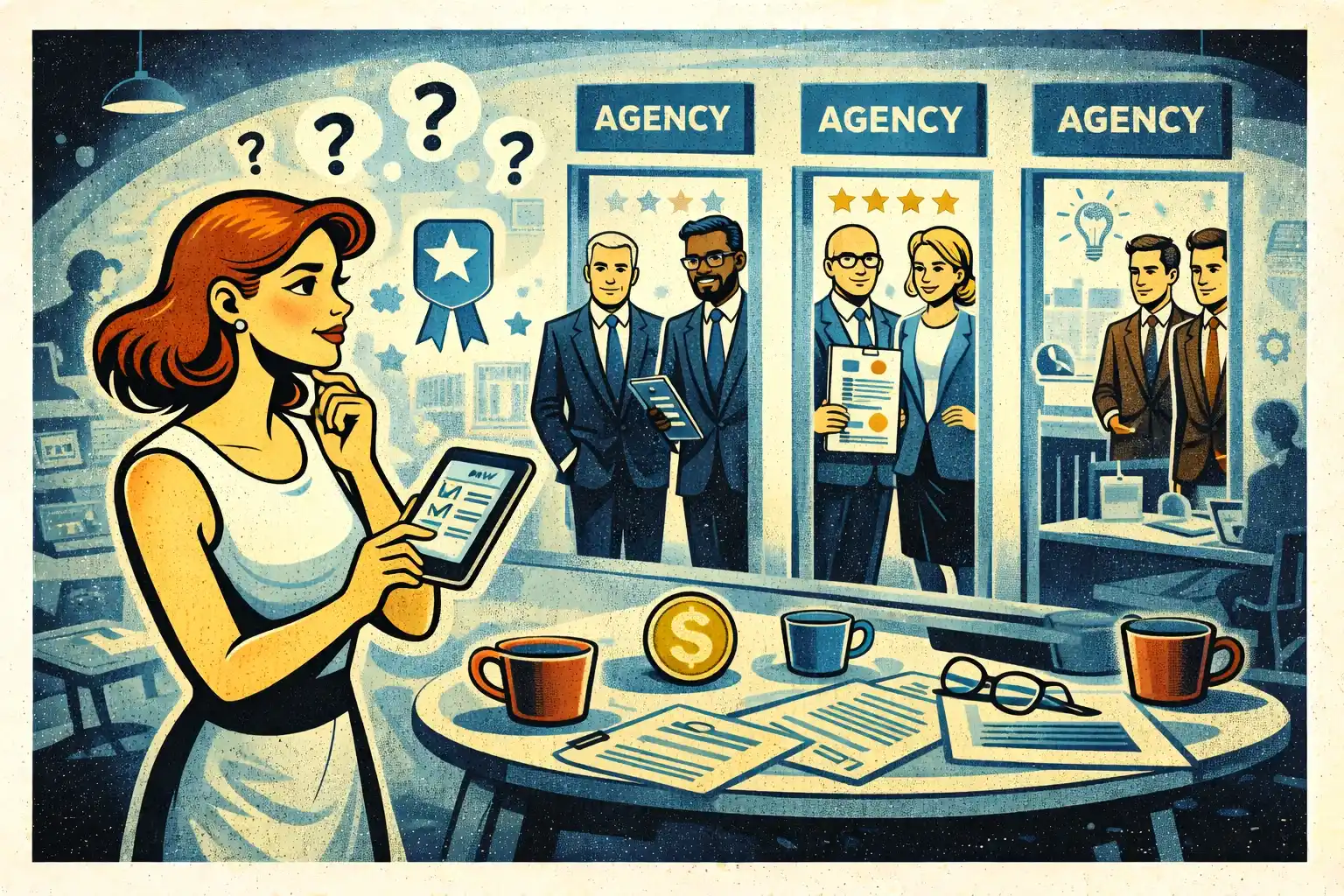
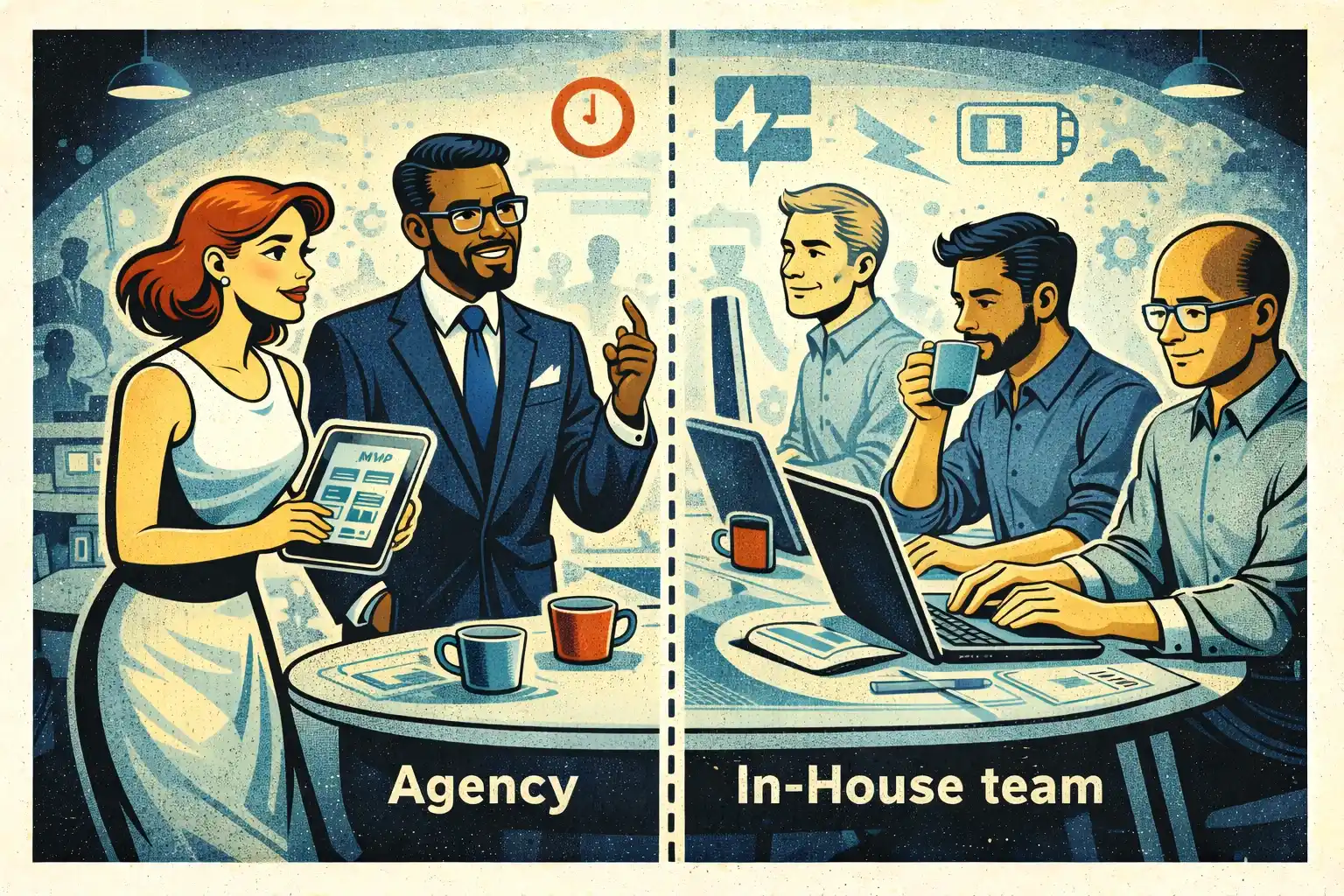
If you’re figuring out whether you should build with an agency, freelancers, or in-house, Startup App Development Company vs Freelancers vs In-House Team is a useful sanity check.
Challenge 7: adoption is about behavior change, not features
Healthcare products often ask users to change behavior:
- Patients must log, upload, track, follow instructions.
- Staff must use a new tool during a busy day.
- Clinicians must trust the output.
Behavior change is hard, so adoption depends on reducing effort:
- Make the “first win” happen fast.
- Reduce steps, reduce text, reduce choices.
- Use reminders carefully (helpful, not noisy).
One of the simplest ways to de-risk adoption is to instrument the MVP from day one and watch where users drop.
If you want a practical, non-technical view of what to track early, read Your First Product Metrics Dashboard: What Early-Stage Investors Want to See.
Challenge 8: data quality is usually the hidden bottleneck
Healthcare data is rarely clean.
- Patient-entered data can be inconsistent.
- Staff might enter partial fields.
- Device data can be noisy.
- Labels and codes can vary across systems.
If your product depends on “perfect data,” it will break.
A better approach:
- Design for missing and messy inputs.
- Validate the minimum required fields.
- Separate “nice-to-have” from “must-have.”
- Use progressive enrichment (start simple, improve over time).
This matters even more if you plan to add AI later—because AI will amplify data issues.
Thinking about building a healthcare app in 2026?
At Valtorian, we help founders design and launch modern web and mobile apps — including AI-powered workflows — with a focus on real user behavior, not demo-only prototypes.
Book a call with Diana
Let’s talk about your idea, scope, and fastest path to a usable MVP.
FAQ
Do I need to be fully compliant before launching an MVP?
Not “fully,” but you do need a clear data boundary, basic security hygiene, and honest disclaimers— especially if you handle sensitive health data.
Should we build EHR integrations in v1?
Usually no. Prove value in a narrow workflow first, then integrate the one system that removes the most friction.
Can AI be the core of a healthcare product in 2026?
It can, but only with strong safety rails. Many successful MVPs use AI for admin-heavy tasks first, not high-stakes clinical decisions.l
What’s the biggest adoption mistake founders make?
Designing for the “ideal user.” Healthcare adoption depends on reducing effort in real-world, high-friction situations.
How do we avoid building a bloated product?
Pick one role, one workflow, and one measurable outcome. Ship that, measure usage, then expand based on evidence.
How long does a healthcare MVP typically take to build?
It depends on complexity and compliance needs, but you can often reach a usable pilot faster by limiting roles, features, and integrations.























































.webp)




.webp)